Showing posts with label freedom to marry. Show all posts

Saturday, March 8, 2014

A Cruel Double Standard

I might need to add #20 to the series NOT a Good Reason to Deny (Consanguineous) Love and #22 to the Discredited Arguments page, because I've heard and read people say that people in consanguinamorous relationships (or step or adoptive relationships that have gone romantic) don't need the freedom to marry because they're already family. In addition to being as senseless as telling a woman she can't marry her sister's husband's brother (which is legal and does happen) because they are already family, the statement can bring up a very cruel double standard.

In many situations involving Genetic Sexual Attraction, the lovers are not legally family for the purposes of insurance, benefits, taxes, hospital visitation, next of kin, etc. because they were adopted into or born into (via sperm, egg, or embryo donation) different families. Also, in many places, when a married woman gives birth, the child is legally her spouse's child as well. What if, due to sex with someone other than her spouse, the woman's child is genetically a half-sibling to another married couple's child, and as adults they decide they'd like to marry?

The double standard is that, while these genetically related people don't enjoy the benefits of being family, in places that still have ridiculous laws discriminating against consensual adult incest, they are considered family and thus can (and are) criminally prosecuted for consensual sex or at least denied their right to marry.

You're not family so you can't get the benefit of being family. You are family so you are going to be prosecuted for having loved each other in sexual way. That's cruel.

As an example, if something were to happen to Melissa and she ended up in a hospital, her adoptive parents could bar Matthew and Linda from even being by her side, let alone making decisions about her care, even though Matthew and Linda are, for practical purposes, her spouses. She would be married to them if she could, but the law isn't there yet.

Those who are sharing, or want to share their lives as spouses or partners often do need the same rights, benefits, and protections as any other spouses, and there’s no good reason to deny them their fundamental right to marry. Also, marriage automatically provides for next-of-kin status, which is especially important when there is some discord between at least one of the lovers and legal family members outside of the consanguinamorous relationship.

There are many cruel double standards when trying to tell other consenting adults how to love each other. GSA or not, consanguinamorous people need discriminatory laws to be done away with, and need access to the protections provided by marriage, if they want them. This is yet another reason we need full marriage equality sooner rather than later.

Thursday, March 6, 2014

Frequently Asked Question: Can Siblings Marry?

The following is based on my understanding. I’m not at attorney and this should not be considered legal advice.

Can siblings marry?

I’m not aware of any government that will currently marry full-blood siblings or recognize a marriage of full-blood siblings; rather, if it was discovered by the authorities after an official marriage was formed that the spouses were, in fact, siblings, the marriage would be dissolved and considered invalid. If the spouses knew they were siblings when they married, they would be subject to prosecution. If they discovered the genetic relationship after getting married, they would have to file for an annulment or dissolution or risk prosecution.

Where sibling consanguinamory isn’t still banned by law, siblings can have a wedding ceremony and live the married life, although under discrimination, as their government will not recognize their marriage and they will not get treated equally.


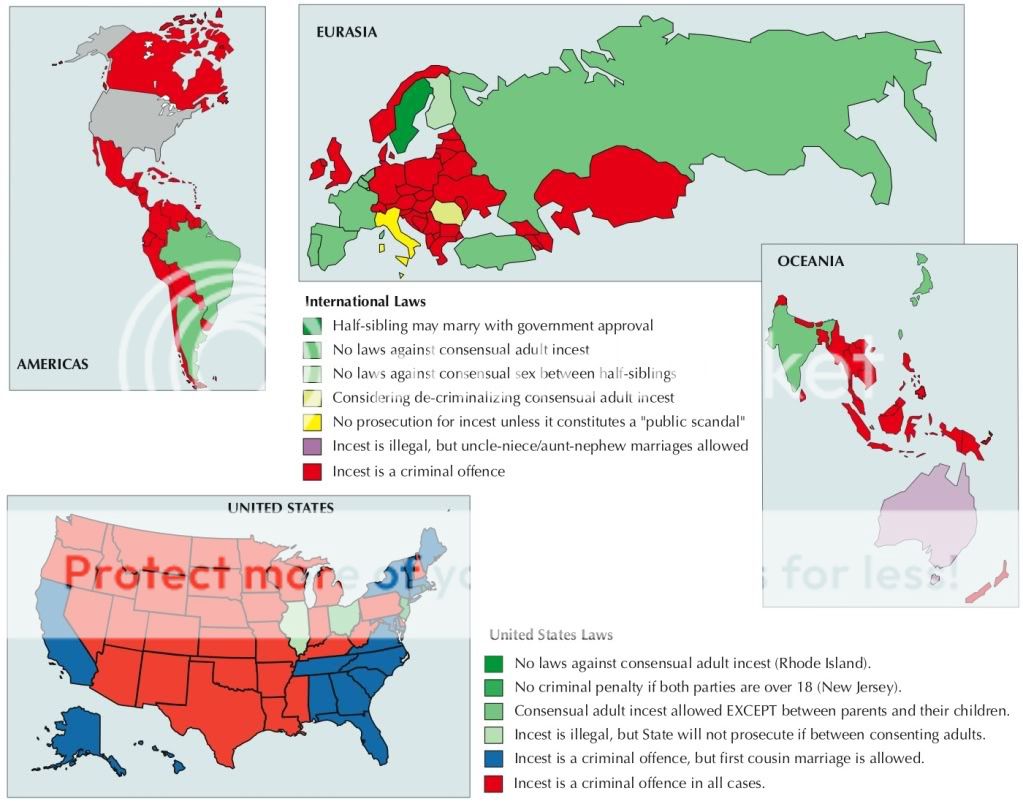
Sweden will legally marry half siblings under certain circumstances. I’m not aware of any country that currently has more progressive laws or laws as progressive as Sweden.

Some siblings report that they have been able to get a marriage license in places like the US based on the ignorance of the authorities, such as the siblings being born in different states or countries and/or not having a shared parent listed on their birth certificates. However, if the laws of that location do not recognize sibling marriages as valid, or if consanguinamory is illegal in that jurisdiction, a marriage license is a potential piece of evidence that can be used in criminal prosecution, and that’s sad.

If siblings want to get married, they should be free to marry. Inequality, based on prejudice, is counterproductive. All over the world, there are siblings living as spouses; there always has been, some with the knowledge and support of friends and family, some hiding the full nature of their relationship. Sooner or later, full marriage equality will be in place in more progressive places, allowing siblings to marry without discrimination or fear of prosecution. Let’s make it happen sooner rather than later.

This question may be asked many different ways. Can siblings get married? Can siblings marry? Can a brother and sister get married? Can a brother and brother get married? Can a sister and sister get married? Can a sister marry her brother? Can a brother marry his sister? Can a sister marry her sister? Can a brother marry his brother? Can you marry your sibling? Can you marry your brother? Can you marry your sister? Can two sisters marry? Can two brothers marry?

Monday, March 3, 2014

The Invisible Asterisk

Sometimes, when someone writes (or says) that they support the freedom to marry or, marriage equality, or #Marriage4All, or “love is love” or something like “The sex lives of consenting adults is nobody else’s business.,” there is an invisible asterisk. You know, one of these ==> *

What might really be going on is this…

“Consenting adults should be free to marry each other.”*


*Unless you mean something I don’t like or think is disgusting, like polygamy, open marriage, or consensual adult incest.


I don’t do that. There is no asterisk in this statement…

I support the rights of an adult to share love, sex, residence, and marriage with any and all consenting adults, without prosecution, bullying, or discrimination.

There is no asterisk after “adult.” An “adult” includes any person, regardless of gender, sexual orientation, race, or religion.

“Any and all” means “any and all”. If an adult woman can vote, be Secretary of State (or Prime Minister, which we don't have in the US), serve as a Governor, be a CEO of a Fortune 500 company, sign contracts, enlist in the military, operate heavy machinery, be sentenced to life in prison or the death penalty (which we do have in many places in the US), and can consent to group sex with three cage fighters she just met, it seems to me an adult woman should also be free to have sex with and/or marry any consenting adult(s), even if that means another woman, or two women, or two men, or a woman and a man, or a married man (not hidden from his existing spouse), or her sister, whether an adopted sister, stepsister, half sister, or full blood sister. All of this goes for men, too, of course.

This basic right means all adults having the same right to not marry at all, and to divorce, and to be free of domestic violence. The basic freedom of association should mean that adults can share the entirely of love, sex, residence, and marriaqe, or any of those without the others, and any civil union or domestic partnership that is offered. That’s a funny thing called… equality. There is no good reason to deny equality. Now is the time to get it done.
So, do you support full marriage equality, or marriage “equality”*?

Tuesday, February 25, 2014

Is Being Poly Genetic?


The Ferrett addresses, “Polyamory Genetic? Is Homosexuality Genetic?”

My thoughts on a genetic polyamory link are the exact same as my thoughts on a genetic homosexual link:

I don’t care.

Right! We have many things, including the technology I’m using to write this and you are using to read this, which are not part of our genetics. What difference does it make? See Discredited Argument #5.

Even if the gays were, as some suggest, all conspiring in one big plot to annoy us fine-thinking straight people, wincing as they sucked distasteful d--- and reluctantly chowed p---y out of some misplaced form of rebellion, it should still be allowed.

The truth is, gay sex is between consenting adults, and it hurts no one but those adults – there are way more deadly car accidents caused by beers than queers. You may consider gayness to be a bad choice, but two people should be free to make bad choices together. And what people want to do for fun in their private life is something that should be allowed, no matter how distasteful it may be to me.

Agreed. See Discredited Argument #1.


We often get caught up in the “nature vs. nurture” aspect of gay and transgender issues, forgetting that this is playing to the conservative bent. What’s important is that people all over the world should have the freedom to live their lives as they see fit assuming they’re not actively harming anyone, and as such Teh Gay Should Be Okay.

So is gay genetically disposed? I say probably, but it doesn’t make a damn bit of difference.

Getting to polyamory…

I’m sure there are tendencies genetically towards certain aspects that encourage polyamory, but polyamory is such a complex term, encompassing so many styles of relationships, that I don’t think a single set of genes could really cover it.

I think we have enough evidence that some people are not monogamous; it goes against their nature, whether being polyamorous can be found in their genes or not.

But it’s irrelevant. I’ve heard it said that after gay marriage gets settled, they’ll be coming after the polyamorous relationships next.

We can only hope. Actually, I’d like to see it all settled at the same time; full marriage equality.

Miranda commented…

For people questioning their identity, I can see how it would be helpful to know that this is what is natural for you. But do we have to use it to justify ourselves with the opposition? I’d rather not anyway.

Yes. It doesn’t matter if someone is turned off by something, or thinks it is harmful to the lovers. An adult should not need to get permission from some politician to be who she or he is and love the person(s) she or he does in the ways to which they mutually consent. An adult, regardless of gender, sexual orientation, race, or religion, should be free to share love, sex, residence, and marriage with any and all consenting adults, without prosecution, persecution, and discrimination.


Is polyamory natural Is polyamory genetic Is being polyamorous natural Is being polyamorous genetic Is polygamy natural

Monday, February 24, 2014

The US Supreme Court Should Rule for Equality

In June 2013, the US Supreme Court took baby steps forward towards full marriage equality. Since then, federal courts and the Obama Administration have been taking more steps forward. But there is still a long way to go and still wasteful resistance to progress.

The Court should consolidate and consider many federal cases now in the system. We want the US Supreme Court to make the best possible ruling, which is to recognize relationship rights, including full marriage equality, for all adults nationwide.

The Court should rule that…


An adult, regardless of gender, sexual orientation, race, or religion, should be free to share love, sex, residence, and marriage with any and all consenting adults, without prosecution, harassment, or discrimination.

There are many reasons why the Court should do this.


1. There are American adults, and in some cases their children, suffering right now because of discriminatory laws preventing them from marrying or even just being together. If we really care about children, equality, stability, security, and valuing family, we will let people decide for themselves what kind of relationships they will have, including marriage, if they want to marry.

2. As Court precedent states, marriage is a fundamental civil right.

3. As Court precedent states, consensual sex is part of the liberty protected by due process under the Fourteenth Amendment.

4. As Court precedent states, when the government intrudes on choices concerning family living arrangements, the usual deference to the legislature is inappropriate, and the Court must examine carefully the importance of the governmental interests advanced and the extent to which they are served by the challenged regulation.

5. Freedom of association for consenting adults is a basic Constitutional right. Just as there is no good reason to ban interracial relationships or marriage, there is no good reason to ban same-gender relationships or marriages, polyamorous relationships or polygamous marriages, or consanguinamorous relationships or consanguineous marriages. There is no good reason to limit marriage to narrowly exogamous heterosexual couples.

6. Freedom of religion is a basic Constitutional right. One group’s religion should not deny the rights of other consenting adults to be together or marry. Conversely, some religions recognize or promote marriages currently banned under laws in most or all fifty states, depending on the marriages.

7. A Court ruling recognizing relationship rights and full marriage equality for all adults will provide what the Constitution requires: equal protection, rather than a piecemeal approach of this freedom to marry or that form of civil union. Equality just for some, or in some aspects but not others, or in this state but not that state, is notequality. The Constitutional principles of equal protection, freedom of association, freedom of religion, and the right to privacy, along with basic fairness, rational reflection, and compassion, necessitate that the US government ensure the rights of all adults.


8. The momentum within the US, neighboring countries, and the modern world is for marriage equality. Full marriage equality is inevitable, as even many opponents of equality admit. So it is pointless to drag the fight out. The Court can end the uncertainties and inconsistencies, and end the hateful, destructive, confusing, costly state-by-state fights that often pit older generations against younger generations, by putting the US on the right side of history sooner rather than later and recognizing relationship rights for all adults. More and more US states are adopting the limited same-gender freedom to marry. Many others have domestic partnerships or civil unions. Utah's law criminalizingpolyamory has been overturned, but that ruling is being appealed by the state, while other states allow polyamory but do not protect polyamorists and deny the polygamous and polyamorous freedom to marry. Some states allow first cousins to marry monogamously without restriction, other states allow them to marry with restrictions, some states ban this freedom to marry entirely, and a couple of states even criminalize sex between first cousins. Some states allowing any adults who are closer relatives their sexual rights with each other while other states ban those rights.


9. Full marriage equality will end inequalities and confusion in immigration policies.

10. Recognizing relationships rights, including full marriage equality, for all adults is good for business, as many businesses have publicly stated. Their employees will no longer be treated as second-class citizens, their human resources departments will not have to deal with state-by-state conflicts, and employees will be free to move (temporarily or permanently) from one location to another without facing different restrictions on their relationships.

11. Government employees, including the men and women serving in our military, will not have to face different restrictions on their relationships from place to place.

Nobody should fear being arrested and imprisoned for having a consensual relationship with other adults.

Nobody should be denied the freedom to marry other consenting adults.

There are people who love each other, who have been living as spouses, even have children together, who are denied their rights, who need and want full marriage equality.

Let’s get on the right side of history sooner rather than later, and put the hate, bigotry, and bullying behind us. The US Supreme Court should protect the rights of all adults in all states.

Thursday, February 20, 2014

Discovering Consanguinamory in the Family Tree

I am [or, had been] active on [a certain Big Online Portal's question and answer service], especially when it comes to explaining the importance of relationship rights, full marriage equality, and decriminalizing consanguinamory. Someone had this question...

Family Tree Concerns..?
My Grandfather recently passed away and my Grandmother told us all that her and my Grandfather were never married, they had always celebrated an anniversary (or so we thought,) but didn't understand while she waited till he died before telling us. After further research into my family tree I have discovered that my Grandmother married her Uncle (is this incest!?!), my Mother feels all weird because it feels like her life has been a lie and the only person she could have asked and got a proper answer was her Dad but now he's gone so we are both just looking for some advice or if anyone has been or is going through a similar situation...
This was my answer, which was chosen as the best answer (thankyouverymuch)...
= = = =
Here's what matters: Was your grandfather a good person? A good spouse to your Grandmother? A good parent? A good grandparent? THAT is what matters, not any genetic or legal relation to your grandmother. There's no lie about any of that. Your mother's life is no different now than it was before she knew that information. She's just allowing cultural prejudices to influence her reaction. Your grandparents had what is called a common-law marriage. As long as they were good to each other, that is what matters.

You didn't make it clear, but it appears you mean your grandfather was the brother of one of your grandmother's parents (he would still be an "uncle" to her if he had, at one time, been married to one of your grandmother's parents' sister without any biological relation to your grandmother). Assuming there was a genetic connection (though it is possible he had been adopted into the family, too), that is still no reason for alarm. This is much more common than people think. People are finding out about this through DNA testing and family records, although family records don't always reveal the truth. If you go back further, it is virtually guaranteed you'll find you have consanguineous ancestors.

You don't have to go too far back in anyone's family tree to find these kinds of things. I doubt there is a person out there whose ancestry has nothing like this.

In other words.... you and your family are as normal as everyone else.
= = =

Just about everyone has incestuous childbearing in their family tree. In some cases, someone was raped, which  of course is a horrible,  or there was cheating. In other cases, it was true love between people who were not cheating on anyone. If the law prevented them from legally marrying or from telling the truth, that is a problem, a terrible problem, of the law, and just one of many reasons we need full marriage equality. It is not something wrong with the lovers.

Wednesday, February 19, 2014

Bus Sighting at Media Matters

Luke Brinker at mediamatters.org, in responding to an anti-equality column by twice-divorced-now-in-third-marriage radio talk show host and author, Dennis Prager, threw polyamorous and consanguinamorous people under the bus.
Prager's prediction dovetails with those of other marriage equality opponents who similarly suggest that necrophilia and bestiality might become commonly accepted practices if gay couples are allowed to marry. But in the 10 years since Massachusetts became the first state to legalize marriage equality, there hasn't been a rush to legalize polygamous unions. Meanwhile, most states that allow incestuous marriages are right-leaning states where same-sex marriage currently isn't allowed.
As Slate's Dahlia Lithwick has observed, the problem with "slippery slope" arguments of the kind advanced by Prager is that they ignore the deep differences between allowing a committed, loving same-sex couple to get married and permitting, say, a brother and sister to get married. Incestuous relationships, Lithwick notes, are often exploitative and psychologically destructive, with severe consequences for children's health.

Here is how I responded in the comments (with links added here for further reading)...
 
The response to bigots when they bring up polygamy and consanguinamory is "What's wrong with letting consenting adults marry?" Please note that under our broad legal systems, corpses and other species (necrophilia and bestiality) are not considered consenting adults. However, a consenting adult might want to marry more than one person, or marry a close relative. When (white) women got the right to vote, there wasn't a rush for voting rights for people of color, and when Loving v. Virginia knocked down bans on monogamous interracial marriages, there wasn't a rush to grant to same-gender freedom to marry, but there should have been.

It is unfair to say that incestuous relationships are often exploitative and psychology destructive. That is ABUSIVE relationships in general, which can include complete strangers and interracial couples same-gender couples. Also, it is the abusive relationships that tend to come to the attention of law enforcement and counselors. Nobody in a good relationship is calling up a shrink or law enforcement and saying, "Hey, I just want to tell you I'm in an incestuous relationship and it is great!"

The "mutant baby" argument is a smokescreen. First of all, some consanguinamorous relationships involve only people of the same gender. Yes, they are gay marriages, so to speak. I have interviewed people in these relationships myself. Secondly, marriage shouldn't be equated with baby-making. Not all mixed-gender relationships birth biological children. Thirdly, contrary to myth, most births to consanguineous parents do not produce children with significant birth defects or other genetic problems (I know some of these children, and so do you, whether you know it or not); while births to
other parents do sometimes have birth defects. Heterosexual couples with obvious, series genetic diseases are not prevented from dating, having sex, having children, or marrying, so the "mutant baby" argument is not a justification for stopping genetic half-sisters who didn't even grow up with each other from marrying.

I expect more from Media Matters than to throw some consenting adults under the bus to assuage bigots. There is no good reason to deny that we must keep evolving until an adult, regardless of gender, sexual orientation, monogamy or polyamory, race, or religion is free to marry any and all consenting adults. The limited same-gender freedom to marry is a great and historic step, but is NOT full marriage equality, because equality "just for some" is not equality. Let's stand up for EVERY ADULT'S right to marry the person(s) they love. Get on the right side of history!

Tuesday, February 18, 2014

The Changing Map For the Freedom to Marry

If you've been unable to keep up with the all of the news of the building momentum for nationwide full marriage equality in the US, Jonathan Capehart at washingtonpost.com has posted a useful graphic of the status of the limited monogamous same-gender freedom to marry in the various states.
During an appearance on “Now with Alex Wagner” on Friday, I had to sneak a peek at the cheat sheet I made for our discussion about the same-sex marriage victory in a Virginia federal court. Ever since the Supreme Court struck down the so-called Defense of Marriage Act (DOMA),  the lower federal courts have been busy hearing challenges to state statutes and constitutional amendments prohibiting same-sex marriage.
(Jonathan Capehart)
He draws the obvious parallel to where bans on interracial marriage were when the Supreme Court struck them down. The graphic is larger at the link.

There is no good reason to deny that we must keep evolving until an adult, regardless of gender, sexual orientation, race, or religion is free to share love, sex, residence, and marriage (or any of those without the others) with any and all consenting adults, without prosecution, bullying, or discrimination.

Sunday, February 9, 2014

Now is the Time - Solidarity is Best


This recent piece coincided with something I had meant to write. It is about solidarity.

This blog, and the related Facebook page, calls for relationship rights for all adults, including full marriage equality. When we say that an adult should be free to marry any and all consenting adults, we actually mean it. We have not hidden that.

I've had more than one polyamorous person think that this is great... when they realize it means I support the polygamous (or polyamorous) freedom to marry... then react negatively when they realize it means I support the consanguineous freedom to marry.

Yes, I do. I support the right of an adult, regardless of gender, sexual orientation, race, or religion, to marry any and all consenting adults. So yes, I support the right of a white woman to marry a man of African ancestry, or 30-year-old man to marry a 60-year-old woman, or a man to marry a man, or a woman to marry two men, or a woman to marry the half-brother she first met when they were both adults. None of these marriages hurt anyone else. None of these marriages hurt anyone, at least not in and of themselves. There are people who aren't right for each other, there are abusers, but that has to do with the individuals involved, and not the general freedom to marry.


There are patriarchal polygynists who want support for their "plural marriages" but do not want to associate with anyone or anything standing up for the rights of LGBT people, or polyandrists, or any non-polygynist polyamorists.

There are monogamist gays and lesbians who dismiss someone else's need for polyamory or for the need of cousin couples to marry.

There are cousin couples who grew up together as much as any siblings who do not support the rights of half-siblings who did not grow up together to get married or even just be together without being criminally prosecuted.

There are many other examples like this. Everyone has their own interests, priorities, likes and dislikes, prejudices, and biases. Some people care only about their needs, not those of anyone else.

But we (including many LGBT people, and many people who are in or seeking plural marriage, a polygamous marriage, a polyamorous relationship, or a consanguineous relationship) are people who support the rights of all adults. We support full marriage equality, not just a freedom to marry for this group or that group. A decent person does not have to like the idea of every one of these relationships to support the rights of adults to have the relationships they want. A person doesn't have to want something for themselves or a loved one to have compassion for others who do need it.

Solidarity is:

1. The right thing to do

AND

2. It will prove to be the most effective way of securing rights.

Even some people who agree with #1 do not agree with #2.

Recently, a polyamorous person expressed to me her concern that my support for consanguinamorous relationships is a threat to the rights of poly people. Consanguinamory just isn't supposed to be how a relationship works, she said to me publicly. But haven't we heard these same things from some monogamist LGBT people about polyamorists? Shoot, we hear it about the "BT" in "LGBT". "Drop the bisexuals and transgendered in order to further the rights of lesbians and gays!" It is not only an awful thing to do, it is a false promise. There's the real slippery slope: allowing those who oppose equality to deny rights to anyone. 

But I was told that I was asking for too much in asking for full marriage equality, that by insisting that consanguineous lovers have their rights, too, that I was going to hurt the cause for poly people and there could be a swing of the proverbial pendulum, essentially back to the hetero-monogamous married only climate of condemning and denying rights to poly people, LGBT people, unmarried lovers, etc. Texas was cited as an example because of the recent vote on abortion restrictions. Texas is an outlier, though. Texas criminalizes consensual adult sex between first cousins, who can legally marry in about half of the states. Remember it was Texas law criminalizing "sodomy" that was stuck down in Lawrence vs. Texas. That was as recently as 2003. Meanwhile, just a year later, the limited same-gender freedom to marry began in Massachusetts after a long-building momentum.

Momentum is strong and increasing. We're not going to see a reduction in LGBT or poly rights; we're going to see a continuing advance. Including rights for the consanguinamorous will not jeopardize this; rather, standing up for relationship rights for all will strengthen the rights for LGBT and poly people. That is true because the people are evolving, for the most part, not because they no longer have their own aversions to relationships different than their own (many of them still do), but because they can think and they have thought through it and realized that consenting adults should be themselves and have their relationships and not be treated as second class citizens for doing so. When someone says we should support rights for consenting adults ...except for consanguinamorous relationships they are actually undermining LGBT and poly rights and the related freedoms to marry, because the people to whom they are making their appeal find the appeal insincere.

Almost all who do oppose or have opposed interracial, same-gender, polyamorous, and consanguineous sexuality/relationships/marriage have done so for two primary reasons:

1. personal disgust
2. their religion

Sometimes those two reasons are indistinguishable.

But when people are calmly but firmly asked to think it through, and their concerns are addressed, they realize that there is no good reason to oppose consensual relationships between consenting adults. When someone insists that it is still OK or right to oppose consanguineous relationships, they are almost invariably bringing back an argument that they just dismissed when it comes to other freedoms to marry, as Greenfield points out. To say that it is permissible to deny consanguineous lovers their rights, someone actually undermines the case for their own rights. Specifically, a polyamorous person runs a risk because the consanguineous freedom to marry takes less paperwork and adjustment than adjusting for polyamory. Also, more people have experienced consanguineous experimentation (at the very least) than have experienced polyfidelity or open coupling. 10-15% of people in their early 20s will confide in surveys to having had consensual sexual contact with a siblings. The percentages increase in older age groups (due to more opportunities as time goes by.) That doesn't include contact with cousins, aunts, uncles, or parents. Some of those people enter into lasting relationships.

Now is the time to push for the rights of ALL adults. The bigots are in retreat. There's no going back. There may be some isolated backlash, but this kind of prejudice is dying out... literally. When we respond to the stubborn bigots by saying yes, discrimination against some adults is OK, the remaining observers, who are the ones who can be persuaded to support rights for polyamorists and LGBT people, are going to lose respect for the argument for equality. So the best response to "What's next?" is "Rights for all consenting adults. Why is that a problem?" The bigots won't have a good reason. Put them on the defensive, and they'll lose.

Consenting adults of any relation can be together in Rhode Island. There's no reason they shouldn't be free to marry, and no reason why first cousins, who can legally marry in California, should not be free to be together in Texas. There's no reason for Utah to criminalize polyamory. There's no good reason for any state to deny consenting adults their fundamental rights to be together and to marry.
Those who oppose equality and have cited my blog have never explained what is wrong with what I have argued. Conversely, people have told me that I have opened and changed their minds about same-gender relationships, about polyamorous relationships, and about consanguineous relationships. I have received relieved and thankful messages from people who are so happy to find that someone speaks for them. I will not throw these people under the bus.

These disputes are nothing new to the civil rights movement. Going all the way back to when African-Americans were still enslaved, there were disputes about what rights to seek and how to seek them. "Do we fight for desegregation? For interracial marriage?" Those fighting for women's rights have had similar disputes. "Do we fight for lesbians or not?"To this day, there are people who say civil rights are for African-Americans. Not for gays, not even for Mexicans. Don't play that game. Stand up for the rights of all adults. You don't have to like the idea of interracial relationships, or same-gender relationships, or polyamorous relationships, or consanguineous relationships to realize that people should have their rights.

Standing up for full marriage equality is not only the principled thing to do, it is the practical thing as well. There are people who are suffering right now because their loving, lasing, happy, healthy relationship is denied equality or even criminalized. This is not right, and it needs to end.

Wednesday, February 5, 2014

Will Utah Make Legislative Baby Steps?

After a federal judge did what should have been a no-brainer to everyone and slapped down Utah's criminalization of polyfidelity and polyamorous cohabitation, a state legislator is trying to make baby steps in the law, as reported by Antone Clark at standard.net...
Rep. Jerry Anderson, R-Price, said House Bill 56 was inspired by a federal judge's ruling in December striking down part of the state's law banning polygamy, following legal action brought by the stars of a TV reality series "Sister Wives." The court ruling threw out the state's section of law prohibiting cohabitation, saying it violates the constitutional guarantee of due process and religious freedom.

Not to mention freedom of association, right to privacy, etc.
His bill is only 29 lines long, and essentially changes the definition of cohabitation and then points out under existing law, bigamy is a third-degree felony.
Bigamy shouldn't be a crime unless it involves fraud. An adult should be free to marry any & all consenting adults. If someone is married and they are marrying another, that shouldn't be hidden from current spouses. Absent that sort of deception, there's no reason for polyamorists to be denied their fundamental rights.
He said the state's existing bigamy definition forces many people into the shadows. He said thousands of schoolchildren list their fathers as unknown, to avoid dealing with the implications of being in violation of the law.

He said the state's existing definition of bigamy puts police officers in a tough position.
Exactly. Criminalization of consensual adult relationships is destructive, causing many unnecessary problems.

This is a baby step. Really, any US state needs relationship rights, including full marriage equality, for all.

UPDATE: The bill is "dead" as the lawmakers sit around waiting for further court action. Sigh.

Friday, January 17, 2014

Frequently Asked Question: Why Is Incest Illegal?


It shouldn’t be illegal anywhere, as you’ll see. As always, we note that we are talking about consensual incest, such as between consenting adults and between minors close in age. We are not talking about anything involving coercion or force or molestation. There are laws against rape, assault, and molestation, and they should remain. We are talking about consensual incest, consanguineous sex and marriage, and consanguinamory, whether initiated through Genetic Sexual Attraction or not.

Short answer: It isn’t illegal everywhere, but where it is, it is the lingering result of sex-police holdovers, superstition, prejudice, and legislative inertia.

Long answer:


A significant part of the reason is that some cultures have an ancient taboo against incest, which begs the question, “Why is incest taboo?”

There seems to be more than one plausible reason why some cultures have had an incest taboo, in addition to protecting the power of the leaders.

1) The taboo appears to be an adoption as law or culture of the biological Westermarck effect, which is a common experience but not one experienced by everyone. Because of this effect, many people develop an avoidance of their close family members as sexual partners, and people have often expected that everyone feels the same way they do, and in many cases try to discourage people from acting differently than they do. But for those who, due to separation or some other reason, don’t experience the Westermarck effect, the bond becomes especially strong if it grows into a consanguinamorous one. It could be that if nobody had experienced the Westermarck effect, most people wouldn’t have ever “left the nest” (unless driven out by the dominant male) and the human race would have had a harder time developing genetic diversity, which was very important to survival when the human population was low. Without a growing and genetically diverse population, the entire population could have easily been wiped out by one disease. We hardly have that problem anymore. So in that respect, the Westermarck effect is vestigial and the taboo is no longer needed. (Note that the need for a growing population was also important when everything was accomplished through much physical labor, requiring many people. This was also one of the reasons why some cultures discouraged same-gender pairing that excluded males from bonding with females and making babies.)

2) Also, in patriarchal societies, it was common to trade daughters away in a business deal or to form alliances with other clans or nations. Especially if virginity was valued in new brides, it didn’t help matters if she was in love with, and making love with, her brother. But as with the previous reason, life has changed much and fewer segments of humanity are trading daughters like bargaining chips.

3) When the entire town or village was expected to attend the same church or temple, the taboo was reinforced if that religion had a prohibition against it. But in many places, this is no longer the case.

Incest was one of many things prohibited in the ancient nation of Israel, per the Torah. Church and political authorities have found incest prohibitions useful not only as part of overall control of sexuality, but for making accusations against opponents and the inconvenient (and how does one prove that they didn’t have sex with someone else?)… and to prevent any one other family from building up and retaining too much power. While royals in Egypt, Hawaii, Europe, and elsewhere married siblings, cousins, and other relatives to retain power, they often  denied other people that right for the same reason.

The religion-imposed taboo should not be underestimated, and leads us into the Other Reasons Incest is Illegal in Some Places.

In many places, there has been an official national or state religion, perhaps with a religious organization having at least some direct influence on the laws. Even in the US, where the Constitution now guarantees freedom of religion and there has been a firmly established separation of church and state, some states were originally colonies established with their own official churches. New states often set up their laws by copying from existing states, and the US has had some Puritan origins, later Victorian influence, and so forth. Famously, alcohol was banned under Prohibition less than a hundred years ago. Before that, women couldn’t even vote and there were many restrictions placed on women that were not placed on men, and thus there was gender inequality under the law and a woman was more or less the property of her father or brother until or unless she married, at which time she became the property of her husband.

Female schoolteachers were expected to abstain from sex or resign if they married. Female pageant contestants had to swear that they were virgins. Until recently, it was common for college dormitory buildings (if not the college itself) to be segregated by gender, complete with curfews and supervisors to try to make sure that students, who were 18 years and older, were not having sex (heterosexual, anyway). Innkeepers, landlords, and property sellers would routinely (often by law) refuse to accommodate or do business with unmarried, mixed-gendered couples.

Boys and young men routinely faced criminal charges for consensual sex with females (or men of any age could be civilly charged with “breach of promise”.)

It was common to have laws against anything but heterosexual intercourse between a husband and a wife. That meant oral sex between a husband and wife was technically illegal, as was any gay or lesbian sex (gay bars were raided by police), unmarried sex or cohabitation; even sex toys and birth control have been illegal in some places. There are still places in the US where someone can be sued for “alienation of affection” for having sex with a married person. Never mind that, even where illegal, brothels have always existed, and fathers have taken their sons to them for their son to have pleasant sexual encounter with a professional, and have mingled with people in power as fellow customers. Never mind that quietly having lovers on the side has been something that has always taken place.

There have also been, and in many ways remain, laws against and restrictions on various forms of dancing, nudity, “crossdressing,” and erotica.

With this sex-negative attitude, it isn’t surprising that there have been laws against incest. What may be surprising is that such laws have remained on the books. There has been a progression of civil rights in places like the US that is moving towards an adult having the right to share love, sex, residence, and marriage with any consenting adults, but we’re still not there. Loving v. Virginia struck down bans on (heterosexual, monogamous) interracial marriages. The Lawrence s. Texas decision struck down laws against gay sex. Cases regarding polyamory and (monogamous) same-sex marriage are currently winding their way through US courts.

In order for remaining laws against consensual incest to be removed, we'll likely need a good test case for the courts. What that would require is a respectable and otherwise law-abiding (and attractive wouldn’t hurt) long-term consanguinamorous couple to fight a state law against consensual incest. The catch-22 is that since people can be, and are, prosecuted for engaging in this consensual relationship, lovers have a strong motivation to hide these relationships, and that is a hindrance to getting the laws changed. It would help if a couple in a state, such as Rhode Island, with no law against consensual incest, applied for a marriage license and subsequently got the courts to overturn prohibitions on consanguineous marriages. However, in addition to fear of prosecution and other legal problems, some people who are, or have been, involved in consanguinamory would prefer the law and/or the taboo remain in place, either because they like being the rebel, they are self-loathing, or they can’t (anymore) have what they want and they don’t want anyone else to have it, either. But they are the minority; most people involved in these relationships very much want their rights.

Throughout all of history, around the world, royal or peasants, urban or royal, rich or poor, there have been close relatives engaging in experimentation or having lifelong spousal-type relationships, and everything in between. You know people who have been involved in consanguinamory whether you know it or not, and whether or not your genealogical charts reveal it, chances are that you don’t have to go too far back in your family tree to find an ancestor whose true biological parents were close relatives.

There are people in relationships right now who would benefit if they had their right to marry. There is now no good reason to keep these laws and the taboo that deny an adult the right to share love, sex, residence, and marriage with any consenting adults. We’re not all going to want the same love lives as each other, but we should allow people to have the relationships of their mutual choosing, the ones in which they will function best.

An adult should be free to share love, sex, residence, and marriage with any and all consenting adults without being subjected to prosecution, bullying, or discrimination.

How You Can Help


Question: Why is incest illegal? Is incest illegal? Why is incest wrong? Is incest wrong? Why is consensual incest illegal? Is consensual incest illegal? Why is consensual incest wrong? Is consensual incest wrong? Why is incest illegal between consenting adults?

A Polyamorous Woman Denied Her Right to Marry


By my count, this is the twenty-ninth ongoing relationship I've covered through exclusive interviews in which the lovers are denied the freedom to be open about their love and are denied their fundamental right to marry.

Zoey is a beautiful young woman, someone you might give a nod and smile to if you saw her shopping in your local store. If you want to see her NOT SAFE FOR WORK Tumblr, you can find it here.


Read the interview below and ask yourself if there is one good reason her right to love the adults she does should be denied.


*****


FULL MARRIAGE EQUALITY: Describe your background.

Zoey: I am almost 23. I am in a type of polyamory/open relationship with my girlfriend Tess (almost 25) and my boyfriend Jack (almost 24). These are our fake names used for anonymous purposes only of course.


FME: Are you legally married or have you ever been legally married?

No, I am not married. I have not ever been married either.


FME: How would you describe your sexual orientation... are you heterosexual, bisexual, what?

I am bisexual.


FME: You currently live with…?

My boyfriend Jack, Girlfriend Tess, our 3 kids, Jack’s mother and his younger sister.


FME: Please describe your polyamorous relationship.

Neither I nor Tess get jealous if we have one-on-one time with Jack. But, there is always time for some group play. Jack even prefers if all three of us make love together. As for how things work, it’s simple, really. Jack has the job in the relationship and Tess and I watch the kids - for now. I’ve been trying to get a job as well so that I can help him with the bills. It’s seems unfair to me that he has to support the 6 of us by himself.


FME: How did this polycule form? Was it a sudden event or a gradual process? Was there a clear initiator?

Originally, I met Jack when we were both working at a haunted house. At the time I was currently in a monogamous relationship with a guy that I used to go to school with, who was also working at the same place but in a different part of the attraction. Jack was very flirty and silly. I clicked with him instantly. He told me a little bit about himself and how he had kids and a girlfriend that was bisexual. I confessed to him that I was also bisexual. We became close friends.

After the season was over I went back to my life with my boyfriend. A lot of drama started between me and my boyfriend’s mother. She found out that I was bisexual because she googled my name. What she didn’t know was that it was a different ‘Zoey’ that she found but, she’s the kind of person where once her mind was set there was no changing it. She was disgusted with me and forced my boyfriend to kick me out. I ended up moving in with my dad and that’s when I got back in touch with Jack. I had a friend request from him on my Facebook. We talked for about a month then he invited me over one random September day. That was when everything fell into place. We all clicked and I’ll admit, it was a sudden occurrence. But, it’s one that I will never regret or forget.


FME: Describe your relationship now.

Now our relationship is more refined and unrevealed except the occasional hugs and kisses but at night when our kids are asleep it’s still very sexual and romantic.

In the aspect of the 3 children that are in our relationship, I am basically a 'step-mother' to Tess's two kids and she is the 'step-mother' to my son. Jack is simply daddy to all of them. It works out wonderfully. In the future Jack and I would like to have more kids. Tess is physically unable to birth any more children so she has been thinking about adoption, and so have I. We all have always wanted a big family and every child deserves a home and a loving family that they can call their own. But, because of our current governmental standing... I don't know how well that would work, if at all.


FME: What are the sleeping arrangements? Is there a schedule?

Tess sleeps by the wall, Jack is in the middle and I sleep on the outside. We share a King sized bed. The only schedules that we follow are Jack’s work schedule and the schedule of our kids. Only one of them is old enough for school and the other two is the job of us stay-at-home mammas.


FME: What kind of rules/agreements for maintaining the relationship are there?

There’s really no rules. We all get along so well.


FME: What is your past experience with polyamory, if any?

Until this relationship that I’m currently in, I had no prior experience. And, I will admit that in the beginning Tess and I had our fair share of jealousy. She wasn’t used to a polyamory relationship either.


FME: Who are you out to? How were you outed? What has been the reaction by family, friends, neighbors, coworkers, random strangers, etc.?

Random strangers are funny. They give us the strangest looks when we’re out together. Me, Tess and Jack have gotten to the point where we don’t care about their looks or we just tell them to f--- off! That’s only if they are being rude though. For everyone else I just posted a status update on Facebook. Although, with my mother I sent a private message. At first she did not accept as easily as the rest but, after some time and my son (her grandson) she was much more accepting.


FME: Is there anything you've had to do to hide the nature of your relationship from anyone? Having to hide can be a lot of trouble. Are there other disadvantages to being in a relationship like this? Conversely, do you think polyamorous relationships have some advantages?

The only people we’ve had to hide from is the government. But, the reason to that is obvious. And, in the sexual aspect there is an advantage for Jack. If one of us is on our period then he can play around with the other. His only disadvantage is when we’re both on our period at the same time.


FME: What do you want to say to people who disapprove of your relationship, or disapprove of anyone having this kind of relationship? What's your reply to those who would say that women are victimized by a relationship like this?

I would say that they are wrong! We are not victimized by our relationship. The only way that I would see us as a ‘victim’ is if Jack was abusive. Which he is NOT!


FME: Can you think of anything that would make relationships like this inherently wrong?

I can’t think of anything wrong with my relationship. Unless it’s abusive, like I have stated above.


FME: If you could have a legal polyamorous marriage, and that included protections against discrimination, harassment, etc., would you? Or even if you do not want a legal polyamorous marriage, do you see a need for protections against discrimination?

Yes, we’ve all already discussed marriage. We ALL want to be united. Both Tess and I have already stated that if we were to get married we would take Jacks last name. And, if we ever decided not to get married for whatever reason then protection against discrimination would be wonderful.


FME: What advice do you have for someone who thinks they may be polyamorous or may want to enter into a polyamorous relationship?

Make sure that the people that will be involved in the polyamorous relationship get along without any type of jealousy. Major conflicts would be good to avoid but, there’s no avoiding tiny little conflicts. Every relationship, whether it be polyamorous, monogamous, or otherwise will have some type of little conflicts. It’s unavoidable.


FME: What advice do you have for family members and friends who are having trouble coming to grips with the reality of their family member or friend being polyamorous?

If you need any other kind of advice you can contact us online at our blog. If you would like to talk to a specific person then specify the name with your message please.


FME: Do you know/meet up with other polyamorous families?

No, we do not, but I think it would be fun to be able to hang out with other like-minded families.


FME: Any plans for the future?

As of now, our only plan is to keep living life happy. The way we are now with no interruptions from the government trying to break us apart. If we are ever able to get married then that would be our next future plan.


FME: Anything else you want to add?

If you would like to talk to us personally you may do so at our blog. Just be sure to specify whom you are talking too in your message.  All three of us run the blog together and if you did not specify it can be confusing.


*****

Here is their NOT SAFE FOR WORK Tumblr blog:
http://ourtriplesexstory.tumblr.com/

There you have it. Consenting adults who aren't hurting anyone, but who have to hide their love, denied their right to marry.

Why should they be denied their rights? There’s no good reason.We need to recognize that all adults should be free to be with any and all consenting adults as they mutually consent, and part of doing that is adopting relationship rights for all, including full marriage equality sooner rather than later. People are being hurt because of a denial of their basic human rights to love each other freely.

You can read other interviews I have done here.

If you are in a relationship like this and are looking for help or others you can talk with, read this.

Thank you to Zoey for doing this interview!

Tuesday, December 31, 2013

Why Polyamory Will Gain Acceptance Faster

It’s not going to take as long for polyamorists to get our freedoms, including the freedom to marry, as it is taking (monogamist) gays and lesbians.

First, I need to have a bit of clarification here. Polyamory has always been around with some public awareness, whatever forms it has taken or whichever labels have been applied, especially if we go with the broad term ethical nonmonogamy instead.

What I mean is that in the US, as well as many other countries, there was a sustained period of trying to force everyone, or at least everyone but the elite, into heterosexual, gender-roled, married monogamy with spouses that were “acceptable” by class, race, religion, etc. Those deemed not suitable for marriage were often kept out of public life in general. For example, people with certain disabilities were expected to stay home or be institutionalized so as to not cause discomfort to people who would be uneasy around them. That oppression is in the process of being dismantled. We are ending the prosecutions, the persecutions, the stigmatizing, and everything else that makes it so people go into hiding (or hiding an important part of who they are) because of who they are and who they love.

Polyamorists haven't had a "Stonewall" moment. Many people cite the Stonewall Riots of 1969 as the start of gay and lesbian people fighting back against such persecution. It has been 44 years and same-gender couples are still barred from legally marrying in most US states and LGBT people still need employment protections (ENDA). But the momentum is rapidly building, especially with the recent Supreme Court actions on DOMA and PropH8 and the death of “Don’t Ask, Don’t Tell” for military service, and all of the public figures who are coming out in support of the same-gender freedom to marry. There have been so many advancements since 1969.

Note that earlier in the 1960s, the US adopted laws to protect racial minorities nationwide, and the Loving v. Virginia case struck down bans on the interracial freedom to marry, over a hundred years after the Emancipation Proclamation. Women got the vote nationwide in 1920 and have made much progress, but are still on the journey.

So will polyamorists have to wait a couple of generations?

Happily, the answer is no. Here why:


1) Momentum. Note that gay civil rights have made progress much faster than feminist and racial civil rights. Likewise, rights for nonmonogamists and people who don’t want to marry at all will not take as long as gay rights. Momentum is building, and polyamorists should be exceedingly appreciative of the work done by the racial, feminist, gay, and lesbian civil rights champions.

2) Smaller opposition. Opposition to polyamory and the polygamous freedom to marry comes almost entirely from specific segments of religious conservatives, more and more of whom are warming up to the fact that civil marriages are not a threat to their churches and that it is destructive and wasteful to concentrate on trying to control adult relationships, especially when it comes to people who are not members of their church. There are some who oppose the polygamous freedom to marry out of concern for tax/benefit issues, but those concerns can be addressed without denying any adults the freedom to marry.

3) Less motivated opposition.
Most of the above considered “line in the sand” to be the same-gender freedom to marry and are already resigned to polygamous freedom to marry upon national establishment of the same-gender freedom to marry. While some monogamist LGBT people bristle at the connection, what matters is that a connection exists in the mind of those who oppose the freedoms and they do not want to continue fighting one freedom if the other is established. Those who identify as LGBT monogamists have much more in common with those who identify as heterosexual monogamists than some heteros realize, but in the prejudiced mind, monogamist LGBT people and polyamorists are in the same big “other” category.

4) More existing understanding. Some strictly heterosexual people are disgusted by the thought of gay sex and much of the now-diminishing opposition from heterosexuals to the same-gender freedom to marry came from that. Or, if not disgusted, they (especially males) simply couldn’t understand how someone might find someone of the same gender sexually or romantically attractive. But almost everyone can understand (or has personally experienced) being romantically or sexually attracted to more than one person at the same time. They’ve had the feelings themselves; this is one reason they bring up polyamory when discussing the freedom to marry. While someone may not personally want to pursue polyamory, they are more likely to avoid opposing those who do. Also, for religious conservatives, there is a heritage of polyamory in their traditions and clear scriptural prohibitions are lacking in most traditions’ scriptures.

5) Strict monogamy is rare. Most people are mostly or strictly heterosexual in how they see themselves and live, even if they’ve had some experiences with someone of the same gender. Very few people are truly and strictly monogamists sexually, emotionally, romantically over the course of a lifetime. Extending rights to polyamorous people, including the polygamous freedom to marry, deals with a reality that everyone has experienced. For example, if someone has children with more than one person, and they are all agreeable to a marriage structure involving three or more people, why deny them that? Relationships, including marriage, usually involve more than one bond (erotic, romantic, friendship, cohabitational, parental, legal, financial, professional, shared interests) between the people involved, and sometimes one of those bonds may diminish or end with one person and begin or increase with another, but there is no reason to end the earlier relationship; there could be good reasons nobody wants to end the relationship. For example, a woman might share sex, residence, children, and a business with one man, and sex, romance, friendship, and a love of theatre with another.

6) Political compatibility. Progressives, libertarians, and conservatives can all find much to like in polyamory, which is why you can find polyamorists in just about all areas of the political map. Polyamorists who are progressives see cooperative and efficient living in polyamory. Libertarians (who generally oppose government restriction on adult behavior that doesn’t violate another’s property or person) and conservative polyamorists like the idea of people relying on each other rather than a government program.

7) Increased compassion. More and more people now recognize that letting consenting adults have their relationships and love each other as they want is the right thing to do, and opposing relationships between consenting adults is not only mean-spirited, but a waste.

8) Experience. While many LGBT people are monogamists, some socially/politically active LGBT people are polyamorists or poly-friendly, and they are already motivated and working towards full marriage equality, and experienced in advancing these civil rights.

While some people fighting for LGBT rights or the same-gender freedom to marry only care about LGBT rights and monogamy, or even reject association with or comparison to polyamorists (including LGBT polyamorists) others have shown solidarity. Polyamorists owe a great deal of thanks to those in the racial, feminist, gay and lesbian civil rights movements for opening minds and establishing rights for adults, as well as continuing solidarity in the fight for those rights. Polyamorists will get their rights faster not because the movement is stronger than the LGBT rights movement, but rather exactly because the LGBT rights movement has been so strong.

Relationship rights and full marriage equality for all adults is going to happen. We’re trying to make it happen sooner rather than later.

Monday, December 30, 2013

Gay Marriage and Incest in the US

Gay marriage (or same-sex marriage, or most accurately same-gender marriage) and incest (consensual, not talking about rape or molestation) are usually two different things.

In the US, the bigotry against marriage equality currently extends to preventing first cousins from marrying in a little over half of the states. As of this updated writing, bigotry still prevents any same-gender couples from marrying in all but eighteen states and Washington, D.C. There are currently fourteen states (including Maine, Minnesota, Illinois, and Utah which have very limiting restrictions) and D.C. that allow first cousins to marry and also has the same-gender freedom to marry. If you consider cousin marriage incestuous, then those are the only places where gay marriage and incestuous marriage have an overlap, as same-gender first cousins can marry.

There are some states that do not criminalize consensual incest between closer relatives than cousins, but they will not marry those lovers. Most US states still have laws against consensual incest (consanguinamory), and in most of them, people do continue to be prosecuted for simply loving each other.

Laws against gay sex have been struck down by the Supreme Court. So, gay sex is legal nationwide, consanguinamory isn’t.

Mixed-gender consanguinamory (such as brother-sister sex) involves sex between consenting adults of who are closely related.*

Gay marriage is a commitment between consenting adults of the same gender.

Those are usually not the same things.

What they do have in common: 1. They are between consenting adults. 2. They don’t hurt anybody. 3. Both have been subject to discrimination and being banned by the sex-negative busybodies who like to interfere in the love lives of others. 4. There is no rational reason, consistently applied to other relationships, as to why either of these are banned where they are banned.  5. Gays and lesbians do not choose their orientation and people do not choose the parents to whom they are born.

Otherwise, they are two entirely different freedoms to marry. I support both freedoms to marry, and others, because I support relationship rights for all and full marriage equality.

An adult, regardless of gender, sexual orientation, race, or religion, should be free to share love, sex, residence, and marriage with ANY and ALL consenting adults, without prosecution, bullying, or discrimination. Don't like it? Then don't do it. (That’s a good, easy response to bigots that doesn't throw anyone under the bus.)

Different people have different likes and dislikes, different biases and prejudices than others. Some LGBT people are in consanguinamorous relationships. Other LGBT people are supportive, some neutral, and some disgusted by the idea. Just like everyone else. But nobody's disgust should interfere in another's life.

Consenting adults may do things with each other that might disgust a majority of other consenting adults, but that disgust of others should not prevent the consenting adults from having their sex or love lives. Each of us should stand up for the relationship rights of all consenting adults. Gay sex may disgust someone. Heterosexual sex may disgust another. BDSM may disgust someone else. Interracial sex may disgust someone else. Polyamory may disgust one person. Consanguinamory may disgust another. So what? The disgusted person doesn’t have to do it, but should recognize that other adults should be free to have orientations, feelings, and relationships they may not understand, and free to express their sexual desires with, and affections for, other consenting adults in the ways they want.


I was originally inspired to write this by the comments by Nick Cassavetes and the reactions to it.

*Some places include adoptive or step relations under the criminalization of incest, even though there is no biological relation between the participants.

Gay Marriage and Incest in the US

Gay marriage (or same-sex marriage, or most accurately same-gender marriage) and incest (consensual, not talking about rape or molestation) are usually two different things.

In the US, the bigotry against marriage equality currently extends to preventing first cousins from marrying in a little over half of the states. As of this updated writing, bigotry still prevents any same-gender couples from marrying in all but eighteen states and Washington, D.C. There are currently fourteen states (including Maine, Minnesota, Illinois, and Utah which have very limiting restrictions) and D.C. that allow first cousins to marry and also has the same-gender freedom to marry. If you consider cousin marriage incestuous, then those are the only places where gay marriage and incestuous marriage have an overlap, as same-gender first cousins can marry.

There are some states that do not criminalize consensual incest between closer relatives than cousins, but they will not marry those lovers. Most US states still have laws against consensual incest (consanguinamory), and in most of them, people do continue to be prosecuted for simply loving each other.

Laws against gay sex have been struck down by the Supreme Court. So, gay sex is legal nationwide, consanguinamory isn’t.

Mixed-gender consanguinamory (such as brother-sister sex) involves sex between consenting adults of who are closely related.*

Gay marriage is a commitment between consenting adults of the same gender.

Those are usually not the same things.

What they do have in common: 1. They are between consenting adults. 2. They don’t hurt anybody. 3. Both have been subject to discrimination and being banned by the sex-negative busybodies who like to interfere in the love lives of others. 4. There is no rational reason, consistently applied to other relationships, as to why either of these are banned where they are banned.  5. Gays and lesbians do not choose their orientation and people do not choose the parents to whom they are born.

Otherwise, they are two entirely different freedoms to marry. I support both freedoms to marry, and others, because I support relationship rights for all and full marriage equality.

An adult, regardless of gender, sexual orientation, race, or religion, should be free to share love, sex, residence, and marriage with ANY and ALL consenting adults, without prosecution, bullying, or discrimination. Don't like it? Then don't do it. (That’s a good, easy response to bigots that doesn't throw anyone under the bus.)

Different people have different likes and dislikes, different biases and prejudices than others. Some LGBT people are in consanguinamorous relationships. Other LGBT people are supportive, some neutral, and some disgusted by the idea. Just like everyone else. But nobody's disgust should interfere in another's life.

Consenting adults may do things with each other that might disgust a majority of other consenting adults, but that disgust of others should not prevent the consenting adults from having their sex or love lives. Each of us should stand up for the relationship rights of all consenting adults. Gay sex may disgust someone. Heterosexual sex may disgust another. BDSM may disgust someone else. Interracial sex may disgust someone else. Polyamory may disgust one person. Consanguinamory may disgust another. So what? The disgusted person doesn’t have to do it, but should recognize that other adults should be free to have orientations, feelings, and relationships they may not understand, and free to express their sexual desires with, and affections for, other consenting adults in the ways they want.


I was originally inspired to write this by the comments by Nick Cassavetes and the reactions to it.

*Some places include adoptive or step relations under the criminalization of incest, even though there is no biological relation between the participants.

Categories