Showing posts with label FAQ. Show all posts

Thursday, March 6, 2014

Frequently Asked Question: Can Siblings Marry?

The following is based on my understanding. I’m not at attorney and this should not be considered legal advice.

Can siblings marry?

I’m not aware of any government that will currently marry full-blood siblings or recognize a marriage of full-blood siblings; rather, if it was discovered by the authorities after an official marriage was formed that the spouses were, in fact, siblings, the marriage would be dissolved and considered invalid. If the spouses knew they were siblings when they married, they would be subject to prosecution. If they discovered the genetic relationship after getting married, they would have to file for an annulment or dissolution or risk prosecution.

Where sibling consanguinamory isn’t still banned by law, siblings can have a wedding ceremony and live the married life, although under discrimination, as their government will not recognize their marriage and they will not get treated equally.


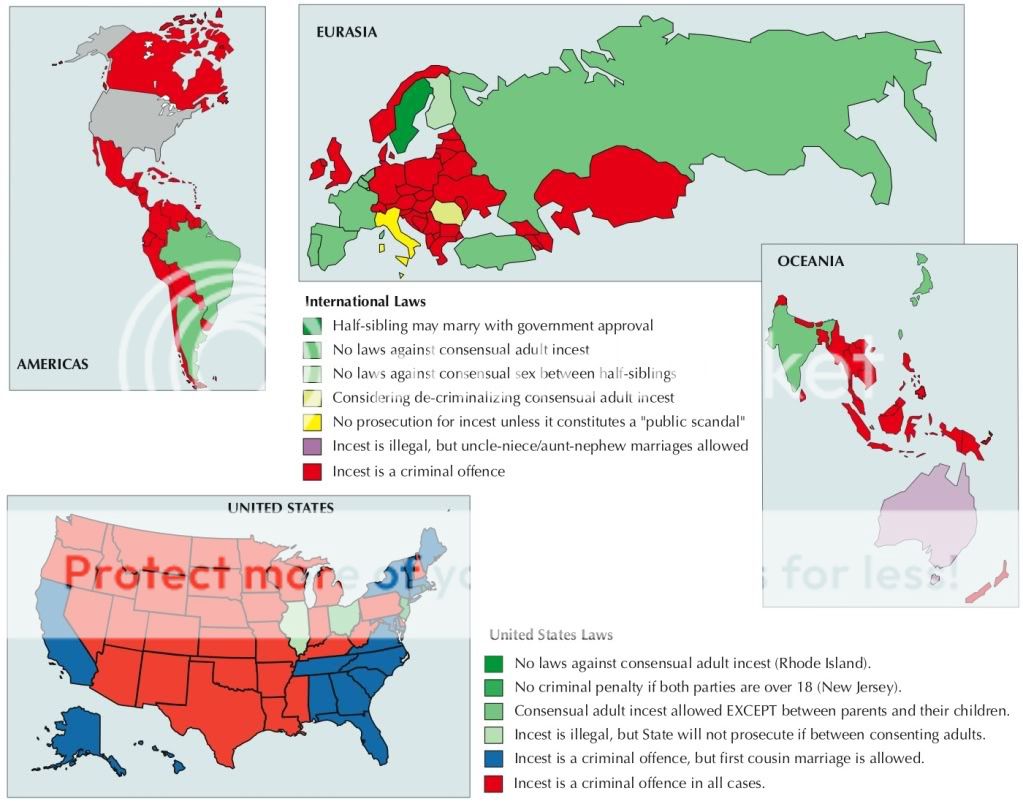
Sweden will legally marry half siblings under certain circumstances. I’m not aware of any country that currently has more progressive laws or laws as progressive as Sweden.

Some siblings report that they have been able to get a marriage license in places like the US based on the ignorance of the authorities, such as the siblings being born in different states or countries and/or not having a shared parent listed on their birth certificates. However, if the laws of that location do not recognize sibling marriages as valid, or if consanguinamory is illegal in that jurisdiction, a marriage license is a potential piece of evidence that can be used in criminal prosecution, and that’s sad.

If siblings want to get married, they should be free to marry. Inequality, based on prejudice, is counterproductive. All over the world, there are siblings living as spouses; there always has been, some with the knowledge and support of friends and family, some hiding the full nature of their relationship. Sooner or later, full marriage equality will be in place in more progressive places, allowing siblings to marry without discrimination or fear of prosecution. Let’s make it happen sooner rather than later.

This question may be asked many different ways. Can siblings get married? Can siblings marry? Can a brother and sister get married? Can a brother and brother get married? Can a sister and sister get married? Can a sister marry her brother? Can a brother marry his sister? Can a sister marry her sister? Can a brother marry his brother? Can you marry your sibling? Can you marry your brother? Can you marry your sister? Can two sisters marry? Can two brothers marry?

Sunday, March 2, 2014

Ten Myths About Sibling Consanguinamory

I’ve noticed some common myths expressed about sibling consanguinamory. In this instance, by consanguinamory, I mean everything from curious exploration and experimenting to erotic romance, including masturbating in front of each other, erotic kissing, sexual touching or rubbing, oral sex, intercourse, etc.

This entry is NOT addressing molestation, assault, or abuse.

I’m referring to adult siblings, or minor siblings who are close in age, engaging in mutual affection or experimentation, without coercion, force, or intimidation. It may be two siblings alone, it may be three or more siblings, or it may be two or more siblings involved together with one or more people outside of the immediate family.

These myths need to be addressed, because they perpetuate inequality, discrimination, hardship, confusion, stigmas, ignorance, and fear.

Myth #1 “It doesn’t happen” or “It happens very rarely” or “I don’t know anyone who has done this.” Just because one person hasn’t been involved or doesn’t remember being involved with sibling doesn’t mean it isn’t happening with others. It is, and it always has. Ongoing sexual relationships between siblings are common enough that everyone knows someone who is, or has been in, such a relationship, and far more siblings than that have had an encounter or experimented, explored, or played doctor. Reality: We all know people who've been involved, whether we know it or not.

Myth #2 “Siblings don’t have sex, rather it is always that one sibling abuses another” or ”It only happens between siblings who have been abused or neglected” or “It always means they need therapy.” At the heart of this is myth is that, because of the dynamics between siblings, one sibling can’t consent to have sex with another. This ignores siblings who weren’t raised together, but even with siblings who were raised together, the claim that one can’t consent to sex with another is an unsupported assertion based on personal aversion, a personal history of abuse, ignorance, or even the absurd notion that females don’t want or enjoy sex. If an 18-year-old woman can legally consent to group sex with three male cage fighters who are strangers to her, or consent to be the mistress of a billionaire with a spouse and children, the President of the United States, or a someone who rented a room in her childhood home and was present for her entire childhood, how can we be consistent in saying that she can't consent to sex with her twin brother or sister? When it comes to minors, most family therapists don’t consider it abuse if minors close in age experiment or have sex; it is considered mutual experimentation (think teenagers who are four or fewer years apart). Abuse and sex are two different things. Sex does happen in some families. Unfortunately, so does abuse. But they aren’t the same thing. Reality: Some siblings do willingly share this at some point in their lives, and may not need therapy at all.

Myth #3. “It only happens as youthful experimentation. Adults don't do this.” While such contact is more common among siblings living together in their youth, it may continue throughout their lives or be initiated during adulthood: everything from while they’re at college to during their senior years. It can happen when siblings are introduced or reunited (Genetic Sexual Attraction,) during a time of personal discovery or experimentation, while one siblings cares for another through an illness or after an accident, during times of grieving, after a breakup or divorce or death of a spouse/lover… anytime, really. Reality: Some siblings share this throughout their lives, some starting late in life.

Myth #4 “It is unnatural.” This myth is not supported either in human history or in other species. While it is very common for people who spent their childhoods in the same residence together, whether genetically related or not, to develop a suppression of sexual attraction to each other (this has been described as the Westermarck Effect), this does not happen to everyone, and siblings who aren’t raised together are often attracted to each other; studies reveal most people are attracted to people who look like them. Reality: In many cases, nothing is more natural.

Myth #5. “It is wrong” or “It is destructive” or “It needs to be stopped” or “They won’t be able to go on to have normal lives.” Different people are going to have different moral guidelines about sex, but sibling consanguinamory is not considered wrong by everyone or all cultures. In many cases, it is advantageous compared to having the siblings involved with others. Nor is there anything inherently destructive about it, but rather some find it constructive. The only way to stop it is to have constant, direct supervision of the siblings 24/7/365. This, however, is needless. For most, the involvement is for a season and it will pass. For others, it will last a lifetime. Either way, there’s no good reason to try to stop it. The only hindrance to having a “normal life” for siblings who continue together is the bigotry of others. Reality: For some, it is the best of all possibilities, it is wonderful and constructive, and they lead perfectly normal, even unusually good lives.

Myth #6 “Only loners, losers, freaks, or ugly people do this” or “It only happens in rural, southern (in the US), poor, uneducated families.” 
Reality: Sibling consanguinamory happens in every demographic and in every part of the US and the world. There are attractive, outgoing, popular, successful, wealthy, educated people who have been, or are still involved with a sibling.

Myth #7 “If they have children, they will be deformed” or “It causes birth defects.” Incest, if it results in a birth, does not cause birth defects in and of itself. Most children born to close relatives are healthy. You know some, whether you know it or not and whether they know their own true parentage or not. Birth defects can be the result of injury during pregnancy, substances ingested during pregnancy, environmental factors, or genetic problems. It is the last one that people tend to be thinking of, usually, when they repeat this myth. That’s because when both genetic parents carry the same genetic problem, it may be demonstrated in the children. However, this can happen with parents who aren’t closely related, too. Reality: Most children born to siblings are healthy.

Myth #8 “It always ruins sibling relationships” or “A person needs a nonsexual relationship with their sibling.” Many siblings report that consaguinamory made them much closer, even if they have ceased that part of their relationship. As far as someone needing a nonsexual relationship with a sibling… that would mean that people who are only children (having no siblings) would suffer, when the studies say otherwise. Also, if someone has more than one sibling, that usually means they’ll still have a nonsexual relationship with the other. Reality: For many siblings, consanguinamory made their relationship much better, and they relate to other people better as a result.

Myth #9 “It is illegal everywhere.”
No, it isn’t. But where it is, the laws should be changed. Some people say such laws are needed to prevent societal collapse due to everyone making mutant babies with their siblings. As already explained, most children born to siblings are healthy. Even so, sibling consanguinamory and reproduction are two different things. In most places where consanguinamory is legally banned, it is entirely legal for brothers and sisters to have genetic children together through artificial insemination. It is entirely legal for someone with Huntington’s Disease to have children, even though the odds are dramatically higher than with a random pair of siblings that the children will have a debilitating disease. We can also look at places where it is legal for brothers and sisters to have sex and children together, such as Spain, Portugal, Rhode Island, and New Jersey. Has there been a crisis as a result in any of those places? (Snooki excluded.) Furthermore, the person who says anti-consanguinamory laws are needed to prevent widespread inbreeding makes it sound like everyone wants to have babies with their sibling, and the only thing holding them back is the law (perhaps there is something they want to tell us?) MOST people will not have intercourse with or marry their siblings, and even many siblings who do will not have genetic children together. Another part of this myth is that laws against consanguinamory prevent abuse. Abuse is illegal regardless of consanguinamory laws, and criminalizing consensual sex actually makes it more difficult to get victims and witnesses to cooperate in the prosecuting of abusers. Reality: Sibling consanguinamory is legal in several US states and many developed countries, but where stupid laws still apply, those unjust laws must go.

Myth #10 “Siblings don’t need the freedom to marry.” This is often augmented with “because they are already family.” But siblings who are sharing their lives as spouses often do need the same rights, benefits, and protections as any other spouses, and there’s no good reason to deny them their fundamental right to marry. Also, marriage automatically provides for next-of-kin status, which is especially important when there is some discord between one or both siblings and other siblings or their parents or grown children. For example, if brothers Adam & Steve have been living as spouses for years and Steve winds up in a coma in the hospital, their estranged, bigoted parents would likely be able to usurp Adam’s rights to make decisions. Finally, in relationships initiated through Genetic Sexual Attraction, they might not be considered family under the law, although in a loathsome double-standard, they may still be subject to discriminatory laws based on their genetic relation. Reality: An adult should be free to marry any and all consenting adults.

In Conclusion


There are siblings who are together right now, providing each other love, comfort, support, or their first sexual experience in a safe and reassuring environment. The biggest problem with sibling consanguinamory seems to be the prejudice and sex-negative attitudes of others. In most cases, trying to force consanguinamorous siblings apart only makes things worse. It can be a mutually beneficial way of bonding, expressing their love for each other, learning, and discovering their sexuality; it may even be a beautiful, lifelong romance.

Let’s not let ignorance cause needless concern or repression.

For further reading:

Common Objections Answered

What Family and Friends Should Know

Case Studies of Consanguinamorous Relationships

How Common is Consensual Incest?

Why Is Incest Illegal Anywhere?

Genetic Sexual Attraction

Consensual Incest FAQ

If You Are Considering It

myths lies misconceptions the truth about real true sibling brothers sisters brother-sister sister-sister brother-brother consanguineous sex incest lovemaking love marriage


Friday, February 28, 2014

Taking the Steps

I have frequently seen the question asked, “It is incest to date my stepbrother?” or “Would marrying my stepsister be incestuous?”

Romance, dating, sex, or marriage between step relations is not literally consanguinamory, but is often subject to the same prejudices, which in some places and cases includes criminalization, as consanguinamorous relationships. With Discredited Argument #18 not a factor, the excuse to try to deny others their relationships is usually Discredited Arguments #1, 3, 19, or 21.

Although someone may try to control our relationships, we can’t effectively control what other people do with their love lives and we shouldn’t try. We don’t pick who our family members love or marry. As such, sometimes someone is brought into our lives as a step relation, such as a stepbrother, stepsister, stepmother, or stepfather whether we like it or not.

Sometimes, we like it. A lot.


Perhaps the most common connection between step relationships is when adults marry and their adolescent or young adult children, who are made stepsiblings, find they are mutually attracted. The Westermarck Effect, which describes the suppression of sexual attraction between people raised together in the same home or close quarters, isn’t experienced by everyone but doesn’t have even a chance to be experienced if young people don’t meet or don’t spend much time together until their pre-teen years or later, as often happens in these cases.

Each of us is our parent’s child. If the person we share genes with and raised us is attracted to someone, is it really surprising that we’d be attracted to that someone’s child? This is especially the case if new stepsiblings spend time under the same roof, perhaps on a full-time basis.

There is no good reason why the relationship of persons A and B should prevent the relationship of persons C and D.

But what about when one person ends up having two lovers from the same family? That can happen if there is a relationship between a stepparent and a stepchild, including cases in which the stepparent never knew the stepchild as a minor. (As always, I’m talking about consenting adults in this entry, or minors close in age to each other.) Perhaps things didn’t work out between the stepparent and the parent, or the parent died, or there’s a polyamorous situation, meaning the parent is still involved. Sometimes, someone’s stepparent is actually from their generation or at least closer in age to them than their parent, due to their parent having entered into an intergenerational relationship. The important thing to remember is that we are talking about consenting adults in these cases. One person’s prejudice against intergenerational relationships or against someone having more than one lover from the same family should not have any control over such consensual relationships.

Relationships like these have existed throughout history. There are also other relationships that have meant someone has (or has had) more than one lover from the same family. Traditional polyandry usually involves brothers marrying the same woman, and many polygynous males marry sisters. Having both mother and daughter or father and son as lovers is a common fantasy, and does happen. (I have had my own experience.)

Someone considering a relationship with a stepsibling, stepparent, or adult stepchild should make many of the same considerations as I have encouraged people to make when it comes to consanguinamorous relationships, and, if applicable, what I wrote about intergenerational relationships.

Parents may not like it when their stepchild gets together with their child, but the parent should remember that it wasn’t the children that created the environment in which they found themselves. Isn’t it better they get along rather than fight? Anyone upset about step relations getting together should read this.

Family strife is one thing. Law is another. There is no good reason to have laws discriminating against adults for their consensual relationships.

Are you, or have you been, involved with a step relation, or someone who later became one? Tell us about it by commenting.

Tuesday, February 25, 2014

Is Being Poly Genetic?


The Ferrett addresses, “Polyamory Genetic? Is Homosexuality Genetic?”

My thoughts on a genetic polyamory link are the exact same as my thoughts on a genetic homosexual link:

I don’t care.

Right! We have many things, including the technology I’m using to write this and you are using to read this, which are not part of our genetics. What difference does it make? See Discredited Argument #5.

Even if the gays were, as some suggest, all conspiring in one big plot to annoy us fine-thinking straight people, wincing as they sucked distasteful d--- and reluctantly chowed p---y out of some misplaced form of rebellion, it should still be allowed.

The truth is, gay sex is between consenting adults, and it hurts no one but those adults – there are way more deadly car accidents caused by beers than queers. You may consider gayness to be a bad choice, but two people should be free to make bad choices together. And what people want to do for fun in their private life is something that should be allowed, no matter how distasteful it may be to me.

Agreed. See Discredited Argument #1.


We often get caught up in the “nature vs. nurture” aspect of gay and transgender issues, forgetting that this is playing to the conservative bent. What’s important is that people all over the world should have the freedom to live their lives as they see fit assuming they’re not actively harming anyone, and as such Teh Gay Should Be Okay.

So is gay genetically disposed? I say probably, but it doesn’t make a damn bit of difference.

Getting to polyamory…

I’m sure there are tendencies genetically towards certain aspects that encourage polyamory, but polyamory is such a complex term, encompassing so many styles of relationships, that I don’t think a single set of genes could really cover it.

I think we have enough evidence that some people are not monogamous; it goes against their nature, whether being polyamorous can be found in their genes or not.

But it’s irrelevant. I’ve heard it said that after gay marriage gets settled, they’ll be coming after the polyamorous relationships next.

We can only hope. Actually, I’d like to see it all settled at the same time; full marriage equality.

Miranda commented…

For people questioning their identity, I can see how it would be helpful to know that this is what is natural for you. But do we have to use it to justify ourselves with the opposition? I’d rather not anyway.

Yes. It doesn’t matter if someone is turned off by something, or thinks it is harmful to the lovers. An adult should not need to get permission from some politician to be who she or he is and love the person(s) she or he does in the ways to which they mutually consent. An adult, regardless of gender, sexual orientation, race, or religion, should be free to share love, sex, residence, and marriage with any and all consenting adults, without prosecution, persecution, and discrimination.


Is polyamory natural Is polyamory genetic Is being polyamorous natural Is being polyamorous genetic Is polygamy natural

Sunday, February 23, 2014

Why? Many of the Same Reasons Anyone Else Does It

Vicky Wireko wrote at myjoyonline.com under "Reality Zone: Why would a father sleep with his biological daughter?"

Without yet getting to the text of the piece, the terms need to be defined. By "sleep," she no doubt means intercourse. But is she referring to rape or is she referring to consensual sex?  Rape and lovemaking are two different things. Rape should always be illegal. Lovemaking should never be illegal. But "biological daughter" can mean a woman the father didn't meet or didn't have a relationship with until she was an adult, or at least hasn't had a relationship with since an early age. Consanguinamory initiated through Genetic Sexual Attraction has a different dynamic than consanguinamory growing from an existing sociological relationship.

Why would a father make love with his biological daughter? I'm talking about CONSENT ADULTS here.

For many of the the same reasons a man would have sex with any woman:

He's a heterosexual male and she's a receptive or initiating female he finds attractive.

They love each other.

It feels good and is fun. This is especially true when it comes to consanguinamory.

To bond.

To express love.

To have children.

Some of them have been brought together through Genetic Sexual Attraction, some of them haven't.

There are many reasons, but they shouldn't need to justify it to anyone else. Why is ultimately theirs to share, not anyone else's business. Perhaps a better question is why wouldn't/shouldn't he? Sex is not a bad thing. Those who think it is are probably doing it wrong.

What did Wireko have to say? Let's see...

Everything is certainly wrong with a father sleeping with his blood daughter.
 Does she give a reason?
It is repugnant apart from the fact that it is a taboo in our custom.
Ah, Discredited Arguments #1 and 2.

However, when a father’s love for his daughter straddles beyond parental love veering off to lust, to the extent of sexual abuse, it becomes horrendous.
Abuse and lovemaking are two different things. She goes on to write about abuse, without giving a good reason as to why consenting adults shouldn't be free to share love, sex, residence, and marriage. Don't like it? Don't do it. But there ARE adult women in loving spousal-type relationships with their biological fathers, despite what prejudiced bigots think.

Please also see Intergenerational Relationships Can Work 


why would a woman sleep with her father why would a father and daughter have sex why would a parent have sex with an adult child why would a woman have sex with her father

Saturday, February 22, 2014

Has Your Partner Experienced Consanguinamory?

I used be active at a certain Big Internet Portal's Question and Answer service, until someone who couldn’t handle me answering questions truthfully when it comes to certain romantic or sexual topics decided to get me "suspended" using a weakness in their automated system. I still will check to see what questions are being asked there, even though I can't participate in any way or even contact anyone there unless they have somehow provided an email address in their question or answer. I will not link to the service, but I will quote it. Someone named Lauren asked this question...

Ok.....complicated one, recently found out my husband and his younger sister had sex for a number of years between the ages of 10-12, this is what he's telling me tho I'm aware this may have more to it? We are a young couple married with two children (boys) my relationship with his family has never been great and this hasn't helped! Can anyone give me any advice or your thoughts on how you would deal with this news? I'm up and down and so confused.....

Questions like this come up more than people might think. Person A is dating or married to Person B and Person A suspects or has found out that Person B has been sexually involved with a sibling or other family member. Person A usually wants to know what they should do.

It is important to clarify the situation by determining the answers to some questions.

1) Is this something that is suspected or has it been confirmed?


Not all families have the same behaviors and boundaries when it comes to physical affection, personal space, joking, and otherwise talking. As such, Person A can look at how Person B interacts with a sibling and think, “I wouldn’t interact with my sibling that way, only a partner” and so think that Person B must have sexual experience with their family member. It isn’t necessarily the case, though. On the other hand, with as common as consanguineous experimentation and sex is, it isn’t unreasonable to wonder.

Unless someone comes right out and makes a clear, credible statement either way, there probably isn’t an easy way to get the truth that will not cause some embarrassment.  One way of handling it could be in expressing needs and negotiating boundaries. Even if someone is monogamous, they should never assume their relationship is monogamous unless that has been explicitly discussed. So perhaps one oblique way of trying to determine if there’s anything current is to say, “I need monogamy. Is that going to be a problem?” Or, if polyamorous, saying “I need to know exactly who else you are going to be having sex with.” Trying to determine if anything happened in the past is going to take being a little less vague. It might be helpful to say something like this, in a nonjudgmental tone: “I was reading that a surprisingly high percentage of people have had sexual experiences with a close family member, enough that everyone knows somebody who has. But I’m not aware of anyone I know who has. Are you?” Depending on how serious the relationship is getting, the questioning can get more direct, because if someone is going to be creating a family with someone else, they should be talking about the dynamics and family history of both families.


2) Was this something that happened in the past or is it ongoing?

If confirmation is obtained, it is important to know whether the sexual aspect of the relationship is likely over for good or if it is ongoing or could easily resume. If it ended, when, why, and how did it end?


3) Was this consensual activity or was it assault/molestation?


I don’t classify assault or molestation as sexual activity or experimentation, as I think those are entirely different things. But as far as abuse or molestation goes, there is a difference between a 12-year-old grabbing his 10-year-old sister once to upset her and realizing it was a terrible thing to do and a 14-year-old forcing themselves on a 7-year-old repeatedly and trying to excuse it with “kids will be kids.” If someone is planning to raise kids with their partner, they should not ignore a history of child abuse.

Some kids engage in mutual exploration or experimentation. Most therapists don’t consider it abusive if minor family members close in age explore by mutual agreement. A 13-year-old and a 12-year-old might be curious. A 20-year-old and an 18-year-old might be in love. And that brings us to another question.


4) If this was a consensual thing in the past, was it a one-time event, a casual family-with-benefits thing, a love affair, or what?

They may have engaged in everything from a one-time instance of playing doctor or some other game, or had an ongoing love affair that they thought was going to last forever. Or perhaps there was something in between. That matters.


Discovering that your partner is cheating on you, deeply in love with a sibling, is a different matter than finding out that your partner used to masturbate in front of a sibling when they were teens, for mutual enjoyment, and both are different than finding out that your partner assaulted three relatives.

Going back to the question that prompted this entry, it wasn’t clear whether both of the siblings were "10-12" or not. Assuming they were close in age, it was not a matter of abuse, and everything ended before they were even teenagers, then there’s nothing for Lauren to do, unless she thinks it is causing ongoing problems in her marriage, in which case she should seek marriage therapy and perhaps individual therapy. If he is a good father and a good husband, she should be happy knowing that he chose to marry her and loves her. That should outweigh what happened in his childhood, even if she thinks what happened is wrong.

All of the above refers to interaction with siblings, cousins or even aunts/uncles who are close in age. There is a different dynamic if the involvement was with an older aunt/uncle, parent, or grandparent (or, in the case of someone who is older, an adult child). Again, abuse is a whole different matter than consensual sex between adults. But consensual adult intergenerational sex does happen, perhaps not as often as intragenerational, but it happens.

If someone is not in a committed relationship, but is rather just dating someone, and they think the other person is “too close” to a family member, they are entirely free to stop seeing them. A casual outsider is not going to change family dynamics, and trying to do so will likely make everyone unhappy. Who wants to be suspicious that their partner is cheating with anyone, let alone a family member? A consanguinamorous bond can be an especially powerful one, and if someone suspects they are dating someone who is has such a bond, issuing an ultimatum will likely mean the dating will end.

Like anything else about a partner’s sexual history, it comes down to knowing what you’ll accept and what you won’t (and what you need to know to begin with). While you may be missing out on a great partner if you “can’t” accept some of the consensual sex in their past or that they will not tell you something, it isn’t a good idea to get in deeper with someone if you’re going to end up holding that aspect of their past against them.

Conversely, if you'll love them and let them know they can be honest with you about their past and whether or not it (still) holds an erotic charge for them, you can have a great time or a great life together, especially if you are willing to sometimes play off of that history in fantasies.

Thursday, February 20, 2014

Discovering Consanguinamory in the Family Tree

I am [or, had been] active on [a certain Big Online Portal's question and answer service], especially when it comes to explaining the importance of relationship rights, full marriage equality, and decriminalizing consanguinamory. Someone had this question...

Family Tree Concerns..?
My Grandfather recently passed away and my Grandmother told us all that her and my Grandfather were never married, they had always celebrated an anniversary (or so we thought,) but didn't understand while she waited till he died before telling us. After further research into my family tree I have discovered that my Grandmother married her Uncle (is this incest!?!), my Mother feels all weird because it feels like her life has been a lie and the only person she could have asked and got a proper answer was her Dad but now he's gone so we are both just looking for some advice or if anyone has been or is going through a similar situation...
This was my answer, which was chosen as the best answer (thankyouverymuch)...
= = = =
Here's what matters: Was your grandfather a good person? A good spouse to your Grandmother? A good parent? A good grandparent? THAT is what matters, not any genetic or legal relation to your grandmother. There's no lie about any of that. Your mother's life is no different now than it was before she knew that information. She's just allowing cultural prejudices to influence her reaction. Your grandparents had what is called a common-law marriage. As long as they were good to each other, that is what matters.

You didn't make it clear, but it appears you mean your grandfather was the brother of one of your grandmother's parents (he would still be an "uncle" to her if he had, at one time, been married to one of your grandmother's parents' sister without any biological relation to your grandmother). Assuming there was a genetic connection (though it is possible he had been adopted into the family, too), that is still no reason for alarm. This is much more common than people think. People are finding out about this through DNA testing and family records, although family records don't always reveal the truth. If you go back further, it is virtually guaranteed you'll find you have consanguineous ancestors.

You don't have to go too far back in anyone's family tree to find these kinds of things. I doubt there is a person out there whose ancestry has nothing like this.

In other words.... you and your family are as normal as everyone else.
= = =

Just about everyone has incestuous childbearing in their family tree. In some cases, someone was raped, which  of course is a horrible,  or there was cheating. In other cases, it was true love between people who were not cheating on anyone. If the law prevented them from legally marrying or from telling the truth, that is a problem, a terrible problem, of the law, and just one of many reasons we need full marriage equality. It is not something wrong with the lovers.

Monday, February 17, 2014

Frequently Asked Question: How Common is Incest?

This summary is not available. Please click here to view the post.

Sunday, February 16, 2014

Clearing Up Consanguinity

Many people get confused about terms like "second cousins" and "once removed" when referring to close but not-so-close relations. Your parent's sibling's child is your first cousin. That person's child would be your first cousin, once removed. That person's child and your child would be second cousins.

Here's a helpful chart that can help explain it.


Source: http://www.sanantonio.gov/atty/ethics/ConsanguinityChart.htm

Remember, there's nothing wrong with experimenting with, dating, or even marrying a cousin. Consanguineous relationships and marriages are nothing new. There are some countries and a little over half of US states where the bigotry against marriage equality extends to preventing first cousins from marrying, but there are many places where marrying a first cousin is legal and common. I'm only aware of a few US states where sex between first cousins is technically illegal, so check the laws of your state if you are concerned. It should be searchable on your official state website.


Saturday, February 8, 2014

How Nonmonogamous People Can Avoid Trouble


Believe it or not, there are still criminal laws in many places criminalizing consensual sex and relationships between adults.

It doesn't matter to them how loving, happy, and lasting the relationships are. It apparently doesn't matter to the people interfering that every dollar or minute they spend trying to stop consenting adults from loving each other is a dollar or minute that could instead go into protecting people, especially children, against predators.

In addition to the persecution and prosecution of consanguinamorous people, polyamorists, polygamists, and other ethical nonmonogamists can face discrimination and even prosecution.
Some awesome people put together a very helpful lists of state laws for polyamorous people in the US or considering moving to the US. First, note the disclaimer that there is an ever-present at the bottom of this blog. I'll mostly repeat it here:

The focus of this blog is consenting adults. This blog does not advocate anyone engage in activity that is currently illegal in their jurisdiction; it does advocate changing or repealing any law that prevents the freedom of association, love, and full marriage equality for adults. This blog condemns rape, sexual assault, and child molestation, and does not provide medical, therapeutic, legal, financial, or cooking advice. This blog links to other sites for informational purposes; it does not necessarily support everything at those links.
OK, with that out of the way, I'll continue as a friend.


Please keep in mind that while a state may not have a law against "fornication" (sex outside of a legal marriage), "adultery" (when a married person has sex with someone other than her or his legal spouse), or cohabitation, it might still criminalize consensual sex between close relatives (whether genetically related, steprelation, or adoptive). For more information about that, see here. Also, laws on the books may be rarely or selectively enforced, so it it s good to consult an attorney familiar with the laws of a state as well as actual criminal and civil cases in that state and general legal climate.

While most nonmonogamists never get prosecuted or sued, the threat is always there in many places.

With states that allow a legally married spouse to get an advantage in a divorce by citing adultery or sue their spouse's lover for financial compensation, the only way to be sure of avoiding a problem is to simply avoid the risk entirely by not getting involved with someone who is legally married, or, if you are legally married, not getting involved with anyone other than your spouse. Even if everyone is enthusiastic at first or at the time of the sex or relationship, someone can still use the law to get what they see as revenge should things tum cold.

State By State


All 50 US states have statutes against bigamy/polygamy (multiple licensed marriages). In most states, bigamy is a felony.

In the following states, bigamy is a misdemeanor. However, once the penalty is paid, you are back at square one.

Alaska
Arkansas
Hawaii (petty misdemeanor-- 30 days in jail)
Iowa
Maine
Missouri
Montana
Nebraska
New Jersey
Ohio
Pennsylvania
Rhode Island (misdemeanor, $1000)
Tennessee
Texas

The following lists are ordered by which states have the most promise statutorily. The first list is the best, the last list is the worst.

The following states, have no statutes against  fornication, adultery, or cohabitation, and they also do not recognize common-law marriages (which assigns marital status to people who might not want to be considered married).

California
Hawaii
Nevada
Oregon
Washington

The following states have statutes that concern adultery, but none for fornication, cohabitation, or common-law marriage. In some of them adultery is grounds for divorce only. In others the offending spouse simply forfeits any rights to the innocent spouse's estate. In the rest of them, adultery is a crime that can only be prosecuted by the offended spouse. In a successful polygamous relationship, these need not be obstructive. If the relationship fails, however, the statutory adulterer will be charged.

Connecticut
Delaware
Indiana
Kentucky
Louisiana
Maine
Maryland (Adultery results in a $10 fine and is grounds for divorce)
Missouri
New Jersey
Ohio
South Dakota
Tennessee
Texas (Texas does recognize common-law marriages, but apparently only if they are registered with the county clerk)
Vermont

Both states make adultery and fornication misdemeanors, although in Illinois the conduct must be "open and notorious." For interest's sake, we have listed all of the states whose statutes are no worse than Georgia or Illinois. This only means that in these states you are as likely as not, to be able to find a lawyer who will talk to you.

Arizona
Georgia
Illinois
Michigan
Minnesota
New Hampshire (New Hampshire recognizes common-law marriages, but only for inheritance purposes after death)
New Mexico
New York
North Dakota

The following states have laws against cohabitation.

Alabama
Alaska
Arkansas
Florida
Massachusetts
Mississippi
Nebraska
North Carolina
South Carolina
Virginia
West Virginia
Wyoming

The following states recognize common-law marriages, or else make adultery a felony, and are not on the previous lists.

Colorado
Idaho
Iowa
Kansas
Montana
Oklahoma
Pennsylvania
Rhode Island
Utah
Washington D.C.
Wisconsin

How do people minimize the risk of losing in court? What can nonmonogamists do to protect themselves? Any of these steps might help...

1) Consult a lawyer. I am not a lawyer. A criminal defense or family law attorney might be someone well worth consulting.

2) Move to more enlightened states or countries.

3) Be careful who you tell and what you tell them. In the US, we have a Constitutional right against self-incrimination (see 5th Amendment) and the right to remain silent when arrested by law enforcement. It's a good idea when dealing with police to give them polite, brief "yes" or "no" or "I don't know" or "I don't remember" answers unless even one of those could incriminate you. In the US, you also have the right to an attorney and it is a good idea speak up and ask for a lawyer if you're held or taken in by police. Also in the US, unless there is imminent danger to someone, you don't have the let police into your home without a search warrant, and even search warrants can have limits. YOU may think something is obvious and gives you away, the police may even have figured it out, but staying silent about it can still protect you.

4) Be careful what you document. Many lovers enjoy taking video or pictures of themselves having fun with each other, but for the nonmonogamous, such media, if it falls into the wrong hands, can be trouble.

5) Have a cover story. Anticipate questions, whether from those you know you or those who don't who might not approve. Historically, it isn't unusual for a home to have three or more adults.

6) Know your risk in raising children. Not only will children have to deal with the prejudice of others, but children may also provide testimony that goes against you, often unwittingly.

7) Stick to private places and lock the door when you get to the fun.


Note that most ethicists say it is OK to lie to authorities who are trying to enforce unjust laws or policies. An extreme example is a Nazi SS officer asking you, "Are you hiding any Jews here?" It was ethical to say "No." Well, I think that applies here, too, though the situation is not as extreme. It is nobody else's business if adults are having consensual sex or relationships.

This advice shouldn't even be necessary, but until we get to the point where we have relationship rights for all adults, including full marriage equality, nonmonogamists should think about protecting themselves. Of course, some level of trouble is necessary to make change. Laws need to be overturned in courts or changed by legislatures, but it is up to each set of lovers to decide for themselves if they want to come out of the closet and to push for those things. The more other people realize that ethical nonomonogamy is a reality all around them, the sooner the persecution will be greatly reduced.

Police officers usually have some wiggle-room when it comes to investigating or arresting people can can look the other way if they choose. Prosecutors can choose not to prosecute. Judges can dismiss cases. Juries can refuse to convict (research jury nullification). So I beg these people to let consenting adults love each other without harassment, without prosecution.

Do you have any suggestions? Any tales to tell about what you've done to protect yourself? What do you think, dear reader? Leave a comment or email me.

Thursday, February 6, 2014

How Consanguineous Lovers Can Avoid Trouble


Believe it or not, there are still criminal laws in many places criminalizing consensual sex between adults, and there are still police officers who will investigate people for this "crime," still prosecutors who will take the case before a court, and still judges and jurors who will convict people and sentence them to prison.

It doesn't matter to them how loving the relationships are. It doesn't matter if they love each other more than they could love others, it doesn't matter if the lovers didn't even meet each other until they were adults. It apparently doesn't matter to the people interfering that every dollar or minute they spend trying to stop consenting adults from loving each other is a dollar or minute that could instead go into protecting people, especially children, against predators.

In addition to this persecution of consanguinamorous people, there aren't any protections against other forms of discrimination against the consanguinamorous, such as employment discrimination. There are still many states that don't have protections for LGBT people, either, and polyamorous people are even less protected than monogamous LGBT people.

I sometimes forget that people don’t follow the news and law as closely as I do for this blog, so they may be unaware of these things. So I want to share with you what I've learned.

First, note the disclaimer that there is an ever-present at the bottom of this blog. I'll mostly repeat it here:


The focus of this blog is consenting adults. This blog does not advocate anyone engage in activity that is currently illegal in their jurisdiction; it does advocate changing or repealing any law that prevents the freedom of association, love, and full marriage equality for adults. This blog condemns rape, sexual assault, and child molestation, and does not provide medical, therapeutic, legal, financial, or cooking advice. This blog links to other sites for informational purposes; it does not necessarily support everything at those links.
OK, with that out of the way, I'll continue as a friend.

The vast majority of people who have consensual sex with a close relative never get "caught." 10-15% of people in their early 20s will confide in surveys to having had consensual sexual contact with a sibling. The percentages rise in older age groups. That's just the people who will confide in the surveys, and doesn't include being with aunts, uncles, parents, etc.. The percentages increase in older age groups because there are more opportunities over the years. Many of those situations involve a moment or a fling or something that just lasts for season, but in other cases they are long-term romances and lifelong spousal relationships.

While most never get prosecuted, the threat is always there in so many places, and I regularly find news reports of such prosecutions. When people do get caught and publicly persecuted and, often, prosecuted, in almost every case, the lovers were outed and handed over to ax-grinding prosecutors due to one or more of a few factors (presented in no particular order):

1) Self-incrimination.
2) Being ratted out by a claimed witness.
3) Testing and reporting of a child's DNA.
4) Being caught in the act by law enforcement.

In other words, it isn’t like the police come door to door, scan crowds in public, or are doing stakeouts to catch consanguineous lovers breaking laws against consensual incest. That's the good news. But let's take a closer look at the bad news.

Self-incrimination. One of the problems is that people either "confess" or tell law enforcement way too much that they don't have to. One or more of them admit the relationship, often not aware it is (still, stupidly) illegal where they are, wrongly thinking if they explain it was consensual then of course the police will leave them alone. For a real-life example of this, see this posting. Law enforcement may also get a hold of some media (love letters, homemade videos) that documents the sexual aspect of the relationship. That's right... doing something so many other lovers do freely can be used against these consensual relationships.

Ratted out. Someone outside of the relationship, whether a nosy neighbor, a malicious ex, a jealous or envious family member, even a professional/academic/social rival sees something, hears something, or just gets a hunch based on how the lovers are smitten with each other and they contact the authorities. See this example.

Child. If someone dares to exercise their reproductive rights and have a child together, the DNA of that child is proof of parentage. Contrary to popular myths, most children born to close relatives are healthy and do not look any different than any other child. Many of the ones I've seen are beautiful children. But, if the child's DNA is tested and the results showing the parents are consanguineous reported to the authorities, depending on the circumstances it may be used as evidence against the lovers. See this example.
Caught in public. Many, many people have had sex in "public" places, usually without getting caught. Depending on the circumstances, police might send the lovers on their way. But, if in checking identification and asking questions, the police determine that the lovers are closely related (see "self-incrimination" above), they might arrest the lovers even when they would have otherwise let them go. See this example.

So what can those who enjoy consanguinamory do to protect themselves? Any of these steps might help.

1) Consult a lawyer. I am not a lawyer. A criminal defense or family law attorney might be someone well worth consulting.

2) Move to more enlightened states or countries. Moving also may get you away from those who are aware of your biological relation and would oppose your relationship. The best states in the US are Rhode Island and New Jersey. Perhaps the worst state is Texas, which technically criminalizes sex between first cousins.

3) Be careful who you tell and what you tell them. In the US, we have a Constitutional right against self-incrimination (see 5th Amendment) and the right to remain silent when arrested by law enforcement. It's a good idea when dealing with police to give them polite, brief "yes" or "no" or "I don't know" or "I don't remember" answers unless even one of those could incriminate you. In the US, you also have the right to an attorney and it is a good idea speak up and ask for a lawyer if you're held or taken in by police. Also in the US, unless there is imminent danger to someone, you don't have the let police into your home without a search warrant, and even search warrants can have limits. YOU may think something is obvious and gives you away, the police may even have figured it out, but staying silent about it can still protect you.

4) Be careful what you document. Many lovers enjoy taking video or pictures of themselves having fun with each other, but for the consanguinamorous, such media, if it falls into the wrong hands, can be trouble.
5) Have a cover story. Anticipate questions, whether from those you know you or those who don't who might not approve. There's nothing unusual or unconventional about family members living together, going places together, or frequently visiting each other. In extreme situations, consanguineous lovers might want to take on "beards," meaning pretending to have a relationship with (even marrying) others to direct attention away from their "forbidden" relationship. If someone does this, it is better not to deceive the beard(s) but rather have an agreement with someone who is fully informed. An example of an ideal situation along these lines would be if two siblings from one family married two siblings from another family. Such marriages have always gone on and were even popular in some places in the past, whether as real marriages or as beard situations.

6) Know your risk in having biological children together. Many consanguineous lovers opt not to take the risk, either for genetic reasons or legal reasons (or, like other people, because they just plain preferred not to have children). In some places, a credible defense if DNA proves a child was born to close relatives is to claim that the child was conceived through using a turkey baster or condom or sex toy that resulted in artificial insemination (the claim would be that the male ejaculated onto or into the object, which was then inserted into the female). In such places, it is the actual sex act that is criminal, not having genetic children together.
7) Stick to private places and lock the door when you get to the fun.


Note that most ethicists say it is OK to lie to authorities who are trying to enforce unjust laws or polices. An extreme example is a Nazi SS officer asking you, "Are you hiding any Jews here?" It was ethical to say "No." Well, I think that applies here, too, though the situation is not as extreme. It is nobody else's business if adults are having consensual sex.

This advice shouldn't even be necessary, but until we get to the point where we have relationship rights for all adults, including full marriage equality, consanguinamorous people should think about protecting themselves. Of course, some level of trouble is necessary to make change. Laws need to be overturned in courts or changed by legislatures, but it is up to each set of lovers to decide for themselves if they want to come out of the closet to push for those things. I have seen at least two couples come out publicly on Facebook, which resulted, in at least one of the cases, them being given trouble by some of the people who were supposed to be their friends. But the more other people realize that consanguinamory is a reality all around them, the sooner the persecution will be greatly reduced.

Police officers usually have some wiggle-room when it comes to investigating or arresting people can can look the other way if they choose. Prosecutors can choose not to prosecute. Judges can dismiss cases. Juries can refuse to convict (research jury nullification). So I beg these people to let consenting adults love each other without harassment, without prosecution.

Do you have any suggestions? Any tales to tell about what you've done to protect yourself, or being caught, or catching someone? What do you think, dear reader? Leave a comment or email me.

Friday, January 17, 2014

Frequently Asked Question: Why Is Incest Illegal?


It shouldn’t be illegal anywhere, as you’ll see. As always, we note that we are talking about consensual incest, such as between consenting adults and between minors close in age. We are not talking about anything involving coercion or force or molestation. There are laws against rape, assault, and molestation, and they should remain. We are talking about consensual incest, consanguineous sex and marriage, and consanguinamory, whether initiated through Genetic Sexual Attraction or not.

Short answer: It isn’t illegal everywhere, but where it is, it is the lingering result of sex-police holdovers, superstition, prejudice, and legislative inertia.

Long answer:


A significant part of the reason is that some cultures have an ancient taboo against incest, which begs the question, “Why is incest taboo?”

There seems to be more than one plausible reason why some cultures have had an incest taboo, in addition to protecting the power of the leaders.

1) The taboo appears to be an adoption as law or culture of the biological Westermarck effect, which is a common experience but not one experienced by everyone. Because of this effect, many people develop an avoidance of their close family members as sexual partners, and people have often expected that everyone feels the same way they do, and in many cases try to discourage people from acting differently than they do. But for those who, due to separation or some other reason, don’t experience the Westermarck effect, the bond becomes especially strong if it grows into a consanguinamorous one. It could be that if nobody had experienced the Westermarck effect, most people wouldn’t have ever “left the nest” (unless driven out by the dominant male) and the human race would have had a harder time developing genetic diversity, which was very important to survival when the human population was low. Without a growing and genetically diverse population, the entire population could have easily been wiped out by one disease. We hardly have that problem anymore. So in that respect, the Westermarck effect is vestigial and the taboo is no longer needed. (Note that the need for a growing population was also important when everything was accomplished through much physical labor, requiring many people. This was also one of the reasons why some cultures discouraged same-gender pairing that excluded males from bonding with females and making babies.)

2) Also, in patriarchal societies, it was common to trade daughters away in a business deal or to form alliances with other clans or nations. Especially if virginity was valued in new brides, it didn’t help matters if she was in love with, and making love with, her brother. But as with the previous reason, life has changed much and fewer segments of humanity are trading daughters like bargaining chips.

3) When the entire town or village was expected to attend the same church or temple, the taboo was reinforced if that religion had a prohibition against it. But in many places, this is no longer the case.

Incest was one of many things prohibited in the ancient nation of Israel, per the Torah. Church and political authorities have found incest prohibitions useful not only as part of overall control of sexuality, but for making accusations against opponents and the inconvenient (and how does one prove that they didn’t have sex with someone else?)… and to prevent any one other family from building up and retaining too much power. While royals in Egypt, Hawaii, Europe, and elsewhere married siblings, cousins, and other relatives to retain power, they often  denied other people that right for the same reason.

The religion-imposed taboo should not be underestimated, and leads us into the Other Reasons Incest is Illegal in Some Places.

In many places, there has been an official national or state religion, perhaps with a religious organization having at least some direct influence on the laws. Even in the US, where the Constitution now guarantees freedom of religion and there has been a firmly established separation of church and state, some states were originally colonies established with their own official churches. New states often set up their laws by copying from existing states, and the US has had some Puritan origins, later Victorian influence, and so forth. Famously, alcohol was banned under Prohibition less than a hundred years ago. Before that, women couldn’t even vote and there were many restrictions placed on women that were not placed on men, and thus there was gender inequality under the law and a woman was more or less the property of her father or brother until or unless she married, at which time she became the property of her husband.

Female schoolteachers were expected to abstain from sex or resign if they married. Female pageant contestants had to swear that they were virgins. Until recently, it was common for college dormitory buildings (if not the college itself) to be segregated by gender, complete with curfews and supervisors to try to make sure that students, who were 18 years and older, were not having sex (heterosexual, anyway). Innkeepers, landlords, and property sellers would routinely (often by law) refuse to accommodate or do business with unmarried, mixed-gendered couples.

Boys and young men routinely faced criminal charges for consensual sex with females (or men of any age could be civilly charged with “breach of promise”.)

It was common to have laws against anything but heterosexual intercourse between a husband and a wife. That meant oral sex between a husband and wife was technically illegal, as was any gay or lesbian sex (gay bars were raided by police), unmarried sex or cohabitation; even sex toys and birth control have been illegal in some places. There are still places in the US where someone can be sued for “alienation of affection” for having sex with a married person. Never mind that, even where illegal, brothels have always existed, and fathers have taken their sons to them for their son to have pleasant sexual encounter with a professional, and have mingled with people in power as fellow customers. Never mind that quietly having lovers on the side has been something that has always taken place.

There have also been, and in many ways remain, laws against and restrictions on various forms of dancing, nudity, “crossdressing,” and erotica.

With this sex-negative attitude, it isn’t surprising that there have been laws against incest. What may be surprising is that such laws have remained on the books. There has been a progression of civil rights in places like the US that is moving towards an adult having the right to share love, sex, residence, and marriage with any consenting adults, but we’re still not there. Loving v. Virginia struck down bans on (heterosexual, monogamous) interracial marriages. The Lawrence s. Texas decision struck down laws against gay sex. Cases regarding polyamory and (monogamous) same-sex marriage are currently winding their way through US courts.

In order for remaining laws against consensual incest to be removed, we'll likely need a good test case for the courts. What that would require is a respectable and otherwise law-abiding (and attractive wouldn’t hurt) long-term consanguinamorous couple to fight a state law against consensual incest. The catch-22 is that since people can be, and are, prosecuted for engaging in this consensual relationship, lovers have a strong motivation to hide these relationships, and that is a hindrance to getting the laws changed. It would help if a couple in a state, such as Rhode Island, with no law against consensual incest, applied for a marriage license and subsequently got the courts to overturn prohibitions on consanguineous marriages. However, in addition to fear of prosecution and other legal problems, some people who are, or have been, involved in consanguinamory would prefer the law and/or the taboo remain in place, either because they like being the rebel, they are self-loathing, or they can’t (anymore) have what they want and they don’t want anyone else to have it, either. But they are the minority; most people involved in these relationships very much want their rights.

Throughout all of history, around the world, royal or peasants, urban or royal, rich or poor, there have been close relatives engaging in experimentation or having lifelong spousal-type relationships, and everything in between. You know people who have been involved in consanguinamory whether you know it or not, and whether or not your genealogical charts reveal it, chances are that you don’t have to go too far back in your family tree to find an ancestor whose true biological parents were close relatives.

There are people in relationships right now who would benefit if they had their right to marry. There is now no good reason to keep these laws and the taboo that deny an adult the right to share love, sex, residence, and marriage with any consenting adults. We’re not all going to want the same love lives as each other, but we should allow people to have the relationships of their mutual choosing, the ones in which they will function best.

An adult should be free to share love, sex, residence, and marriage with any and all consenting adults without being subjected to prosecution, bullying, or discrimination.

How You Can Help


Question: Why is incest illegal? Is incest illegal? Why is incest wrong? Is incest wrong? Why is consensual incest illegal? Is consensual incest illegal? Why is consensual incest wrong? Is consensual incest wrong? Why is incest illegal between consenting adults?

Monday, January 13, 2014

Sibling Rivalry or Sibling Revelry

I used to be active on a certain Big Online Portal's question-and-answer feature, answering questions related to full marriage equality and relationship rights for all adults, and occasionally questions about teenager sexuality. I still read what goes on there. Every once in a while, someone will ask a question like this...
I caught my siblings making out, what should i do?
I caught my 16 year old sister and 17 year old brother making out, I don't really know what to do. To be honest I'm very shocked, and a bit disoriented thinking about it. They're both pretty attractive, I don't see why they would shack up with each other when they could go out and get people who... aren't related to them.

I want to tell ma and pa, but they begged me not to, don't really know how to approach this situation, Or if I should just respect their privacy. I guess I'm just worried about their mental health, but I guess that's pretty unfair of me to assume something is wrong with them.

What do i do?
For all we know, the teens "making out" with each other are both half-siblings to the asker, and unrelated to each other, or they could be stepsiblings or adopted siblings. Or, they could be half or full-blood siblings to each other. (It might have even been a Genetic Sexual Attraction situation if the siblings have not been raised together.) Whatever their genetic, legal, and social relation, it isn't uncommon for siblings as close in age as they are, especially in their teens, to have such affection between them.

Also, we don't know where they live, and thus whether or not they live somewhere where it is legal for a 17-year-old and 16-year-old to have sex with each other.

Most therapists consider such sibling behavior, absent any coercion, force, or intimidation, to be mutual experimentation or exploration.

In general, however, my advice to someone in the asker's position is to:

1. Confirm this is a voluntary activity. If observing wasn't enough, ask the younger/smaller/less assertive/more needy sibling if they are being pressured, intimidated, coerced, or forced in any way.

2. Respect their privacy. Start by reminding them it's a good idea to be discreet and promise you will knock.

3. Protect and support them.

4. If needed, assist them in accessing contraception and health care.


Walking in on anyone "making out" with someone else can be unsettling, especially if you're uptight about your own sexuality. Walking in your sibling in such a situation can be more so. Walking in on your sibling doing something to which you have a personal aversion (in this case, making out with a sibling, but in other cases it might be group sex, or gay sex, etc.) can be all the more so. But just because you might not want to do something doesn't mean someone else shouldn't or is mentally ill for enjoying that activity or enjoying that other person in that way. There may also be some feelings of jealousy and sibling rivalry prompting some negative reaction.

As far as there being so many other people they could be with: that will always be the case with any relationship. There is always "someone else" any given person could be with, but that is no reason these two teenagers shouldn't be together in the way they want. They love, trust, and enjoy each other, and have something they would be unlikely to find in others. This is what is working for them. Trying to force them apart would only cause problems. They will either stop on their own, moving on to other lovers, or they won't, and will have to deal with the prejudices that exist against such love.

The advice for parents who walk in on such a situation is a little different if the parents are legally responsible for the lovers, and I tend to subscribe to "your house, your rules" to a certain extent.

Brandy likes to answer questions like these...
According to research I've seen, it's been estimated that between 25% to 50% of teenage guys would be gladly willing to engage in consensual sexual activities with their blood-related sisters if given the opportunity. Less than 1% of teenage females would be willing to do anything sexual with their brother, though. Your sister is simply in that smaller catagory. It doesn't mean that she's evil or twisted. As long as she hasn't been abused or molested, then she's probably emotionally healthy and mentally stable.
Brandy then goes on a bit of a tangent.

Aurélie also answered, giving her personal experience with the subject...
Well Charlie, what people want to do with themselves and with each other is their own business. No one is being harmed or defrauded by their activities.

Personally, I think that siblings enjoying each other's bodies is not wrong (as long as it's consensual).

My twin brother and I have been enjoying special intimacy and sexual fun together for 3 years (we're 17 now). We don't have sex, but we have a fantastic time french kissing and cuddling together without any clothes on. Sharing orgasms by rubbing our "down there" parts together is by far the best.

If our parents found out, then we wouldn't deny it. We'd tell them that we love and respect each other. We don't lie to each other, and we don't cheat on each other. There isn't any drama or jealousy. We've never been naked with anyone else, so there aren't any STD's.

And I was the one who suggested that we start sharing our bodies and have some intimate fun together. It was completely my idea. At first my brother flatly refused to believe me. He couldn't believe that I was offering myself up to him on a silver platter, and he was certain that my request was a prank or a set-up, or that one of my friends was hiding somewhere and would burst out and start laughing at him. I finally gave up trying to verbally convince him, so I just stripped naked for him. That's when he said "Wow! OK! Great!"

Would people prefer that I instead had chosen a classmate from school or gotten a serious BF who would have screwed me and then immediately dumped me when I was 14? A guy who would have lied to me? A guy who would have boasted about screwing me to all of his friends? A guy who might have given me an STD? Assuming 2 BF's per year, then by now I might have been screwed by 6 different guys already, so ask all of those same questions again 5 more times.

Because my brother and I have shared something very special together (and continue to do so), today we're still virgins and yet we're both wonderfully sexually satisfied. So are the activities that I'm sharing with my brother really that horrible? Not in my opinion. We both really enjoy it, and we both treasure the fact that we genuinely care about each other. We don't ever feel the need to wear masks around each other. The sense of complete freedom is awesome beyond measure.

Siblings are better off being intimate, practicing on each other, and enjoying each other... instead of allowing themselves to be lied to and used by unrelated STD-infested players and gold-digging b*tches who wouldn't give a crap about their feelings.
Finding your siblings together in this way does not need to disrupt the home. This sort of thing has gone on for all of human history, in every culture, in rural families and urban families, poor families and rich families.

People in consanguinamorous relationships like the one described in the question can find some support.

Also see Ten Myths About Sibling Consanguinamory

This entry addresses questions like Why would brothers and sisters have sex? Why would siblings have sex? I caught my siblings or brother and sister having sex; what should I do? I caught my brothers having sex. I caught my sisters having sex. Do siblings have sex?

Categories